 blog
Ati Restoration Alternative: Fire Damage Help in 2026
Table of Contents
- Why Homeowners and Property Managers Seek an Ati Restoration Alternative for Fire Damage
- How Fire Damage Restoration Companies Compare: National Chains vs. Local Providers
- What a Realistic Fire Damage Restoration Timeline Looks Like
- Fire Damage Insurance Claims: How Coordination Actually Works
- Questions to Ask a Restoration Company Before You Sign
- Residential vs. Large-Loss Commercial Capabilities
- Choosing the Right Ati Restoration Alternative for Your Property
- Frequently Asked Questions
Last Updated: October 20, 2026
Why Homeowners and Property Managers Seek an Ati Restoration Alternative for Fire Damage
When a fire tears through a home or commercial building, the search for help often starts with the biggest name a person can find. But an Atirestoration alternative for fire damage is what many property owners actually need once they understand how large national chains operate.
The core issue is simple. A national chain may have hundreds of crews, but the one assigned to your property might be stretched across three counties. Fire damage worsens by the hour as soot settles into HVAC systems and fire suppression water seeps into framing. Every delay compounds the damage and the cost.
This guide breaks down how fire damage restoration companies actually differ, what a realistic timeline looks like, how insurance coordination works, and the questions that separate a good contractor from a costly mistake. Below, we show you exactly how to evaluate an Atirestoration alternative so you choose a provider that shows up fast and stays accountable.
How Fire Damage Restoration Companies Compare: National Chains vs. Local Providers
National chains and local providers differ most in response time, local knowledge, and how much of the job they keep in-house. But for a property owner searching an Atirestoration alternative for fire damage, the useful comparison is not "big vs. small", it is a side-by-side evaluation of service scope, coverage area, response model, and project fit. Most top-ranking pages stop at company profiles; this section gives you a buyer's framework.
Use these four dimensions to compare any candidate, including national chains and independent alternatives:
| Comparison dimension | What to verify | Why it matters after a fire |
|---|---|---|
| Service scope | Does the provider handle emergency board-up, water extraction, soot and smoke cleaning, deodorization, demolition, and reconstruction, or only part of that chain? | A provider that stops at mitigation forces you to hire and coordinate a second contractor for rebuild. |
| Coverage and service area | Is the crew based in your metro, or dispatched from another region? Ask for the physical address of the nearest office and a written arrival window. | Fire damage worsens hourly as soot enters HVAC systems and suppression water seeps into framing. |
| Response model | Is intake handled by a call center or a local project manager? Who is your single point of contact from first call to final walkthrough? | Multiple handoffs slow documentation and decisions during the claim. |
| Project fit | Does the provider staff residential losses and large-loss commercial projects with the same capacity, or is one side an afterthought? | A crew built for warehouses may treat a single-family home as filler work, and a residential crew may lack manpower for a multi-unit building. |
A national chain offers scale and standardized processes, which can help during a widespread event when local crews are stretched. A local or regional alternative offers speed, direct accountability, and familiarity with the neighborhoods, building stock, and insurance adjusters in its service area. The trade-off is real: a smaller provider may have fewer crews, so availability can tighten during a regional catastrophe. That is why asking about current capacity before you sign matters.
A practical way to compare is to request the same written scope from two or three providers and line them up against the four dimensions above. Ask each one:
- Which phases of the job do you perform with your own employees, and which do you subcontract?
- What is the physical address of the office that will staff my project?
- Can you confirm an arrival window in writing?
- Who is my point of contact, and what is their direct line?
- What is the largest and smallest project you have handled in the last year?
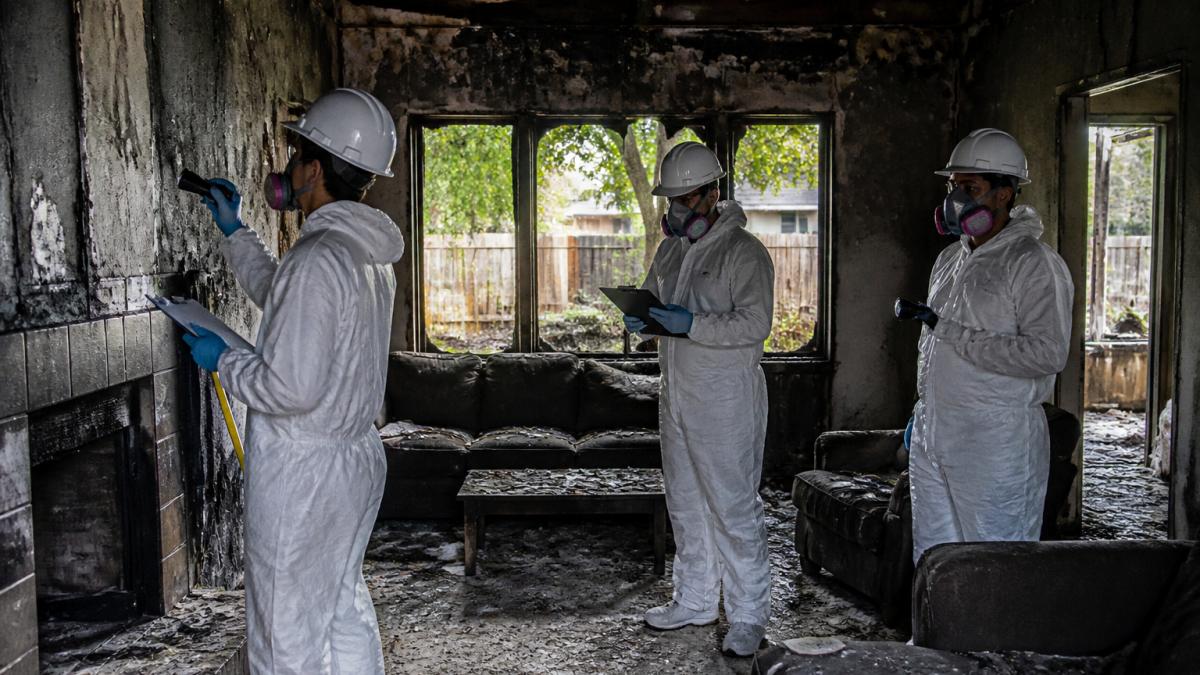
What a Realistic Fire Damage Restoration Timeline Looks Like
A typical fire damage restoration timeline runs from emergency board-up within hours to full reconstruction over several weeks or months, depending on the extent of structural damage. The sequence matters because each phase protects the property from further loss.
Most projects move through these stages:
- Emergency response and board-up - securing windows, doors, and the roof to prevent intrusion and further damage.
- Damage assessment - documenting fire, smoke, and water damage for the insurer and the repair plan.
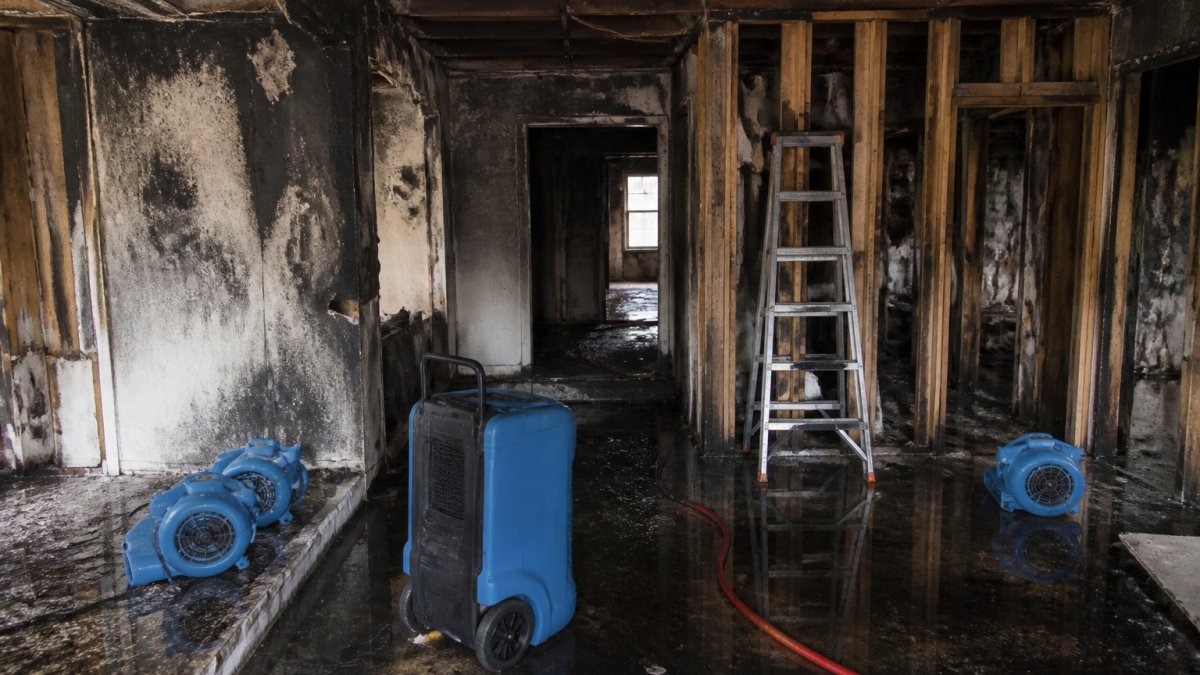
- Water extraction and drying - removing fire suppression water before mold contamination takes hold.
- Soot removal and cleaning - addressing smoke residue on surfaces, contents, and HVAC systems.
- Deodorization and air filtration - treating smoke odor at the source and improving indoor air quality.
- Demolition and debris removal - clearing charred materials that cannot be saved.
- Reconstruction and rebuilding - restoring the structure to a safe, livable condition.
The biggest variable is water. Firefighting water often causes as much damage as the flames, and mold can begin developing within days in damp, warm spaces. Fast drying is not optional.
Fire Damage Insurance Claims: How Coordination Actually Works
Fire damage insurance claims move faster when the restoration company documents the loss thoroughly and communicates directly with your adjuster. The contractor does not decide coverage, but the quality of their documentation heavily influences how smoothly the claim proceeds.
1. Emergency mitigation is scoped and billed separately from permanent repairs. Insurers generally treat emergency board-up, water extraction, and drying as mitigation to prevent further loss, and permanent reconstruction as a separate scope.
2. Damage is documented before anything is demolished. The restoration team photographs and inventories affected materials, takes moisture readings, and records a room-by-room scope before demolition begins. This matters because once charred drywall or soaked flooring is removed, the evidence the adjuster needs is gone.
3. The estimate is built in an industry-standard format. Most restoration firms prepare estimates using line-item estimating platforms that insurers and adjusters already recognize, which reduces back-and-forth. Ask a provider whether their estimates are line-item and platform-compatible; a one-page lump-sum bid is harder for an adjuster to approve.
**4.
**5.
6. You review your policy and your state insurance regulator's consumer guidance. Coverage limits, deductibles, and whether your policy includes additional living expenses or business interruption coverage all affect your out-of-pocket cost.
Property owners sometimes ask whether they need a separate public adjuster. In many cases, a restoration partner that handles documentation and adjuster communication removes that need. In complex or disputed claims, a public adjuster may still be worth considering, but that decision is separate from choosing a restoration contractor.
Questions to Ask a Restoration Company Before You Sign
The right questions to ask a restoration company reveal whether they can actually deliver, not just whether they answer the phone. Ask them before you sign anything, and get key answers in writing.
Run through this checklist:
- How quickly can a crew reach my property, and can you confirm it in writing?
- Are your technicians licensed and insured?
- Do you handle board-up, cleanup, and rebuild, or will I need multiple contractors?
- How do you document damage for my insurance claim?
- Can you show me how you test for hidden water and smoke damage?
- What is your process for smoke odor and HVAC decontamination?
- Who is my single point of contact from start to finish?
A company that handles the entire recovery process, from initial inspection through rebuilding, spares you the burden of coordinating several trades during an already stressful time. That single-accountability model is often the difference between a smooth claim and a frustrating one.
Residential vs. Large-Loss Commercial Capabilities
Residential restoration and large-loss commercial restoration demand different resources. A single-family home needs focused, careful work. A commercial property or institutional facility needs the capacity to handle large square footage, business interruption concerns, and complex project management.
For homeowners, the priorities are protecting belongings, restoring livable conditions, and moving through the insurance claim without added stress. For commercial property owners, the stakes include getting operations back online and documenting losses tied to business interruption.
What most guides miss is that not every provider scales in both directions. A company built for large-loss projects may treat a small residential job as an afterthought, and a residential-focused crew may lack the manpower for a warehouse or multi-unit building. Ask directly which side of that line a provider sits on, and confirm they can staff your specific project.
Choosing the Right Ati Restoration Alternative for Your Property
Choosing the right Atirestoration alternative for fire damage comes down to matching the provider's strengths to your property and your urgency. The best choice is the one that responds fast, documents thoroughly, and stays accountable from board-up to rebuild.
Here is how we would evaluate any candidate:
- Confirm a real arrival window, not a vague promise.
- Verify licensing and insurance.
- Ask who owns the job end to end.
- Review how they handle insurance documentation.
- Check whether they can handle both cleanup and reconstruction.
For property owners in the Greater Houston area, Disaster Services offers 24/7 emergency response, free visual inspection, and comprehensive insurance claims assistance. Our locally and family owned team handles everything from fire and smoke damage restoration to water extraction and mold remediation, so you are not juggling multiple contractors. We are licensed and insured, and we manage the entire process from initial inspection through rebuilding.
A fire is stressful enough without wondering whether your restoration crew will actually show up or whether your claim will stall. If you are weighing an Atirestoration alternative, choose a partner that responds fast, documents carefully, and handles the whole job under one roof. Disaster Services provides 24/7 emergency response, free visual inspections, and full insurance claims assistance for homes and commercial properties across the Greater Houston area. Contact us today to get a crew moving and start your recovery the right way.
Frequently Asked Questions
What should I look for in an alternative to Ati Restoration for fire damage?
Look for licensed and insured technicians, 24/7 emergency response, a written scope of work before demolition begins, and clear documentation for your insurance claim. Ask how the company handles soot removal, smoke odor, and water damage from firefighting. Confirm whether they manage the entire project, including board-up, cleanup, and rebuilding, so you are not coordinating multiple contractors. Response time matters most in the first 24 to 48 hours, when soot and moisture can cause secondary damage.
How long does fire damage restoration take?
A fire damage restoration timeline depends on the size of the loss. A contained kitchen fire may take one to three weeks for cleaning, deodorization, and minor repairs. A structure fire with room-and-contents damage often runs four to twelve weeks once demolition, drying, and rebuilding are included. Large-loss commercial projects can extend longer. Your contractor should give you a written schedule after the initial damage assessment, and that schedule should be updated as the insurance scope is approved.
Does homeowners insurance cover fire and smoke damage restoration?
Most standard homeowners policies cover fire damage, smoke damage, and water damage from firefighting, minus your deductible. Coverage typically includes emergency board-up, soot removal, deodorization, and rebuilding. Keep every receipt and photo. Your restoration company should document the loss with moisture readings, photo logs, and an itemized scope that matches your policy language. Review your policy limits for dwelling, personal property, and loss of use before work begins so there are no surprises.
What questions should I ask a restoration company before hiring?
Ask whether they are licensed and insured, how fast they can arrive, and who will manage your project day to day. Request a written scope of work and a clear explanation of what is included. Ask how they handle fire damage insurance claims, whether they communicate directly with your adjuster, and whether you will owe anything beyond your deductible. Also ask about smoke odor removal methods, air filtration, and how they verify the job is complete before final billing.