 how-to
Commercial Water Damage Restoration: A Step-by-Step Guide
Table of Contents
- Assess the Damage and Document Everything
- Emergency Water Extraction Services: First Steps
- Water Damage Restoration Timeline: What to Expect
- Structural Drying and Dehumidification Process
- Mold Remediation and Sanitization
- Commercial Property Disaster Planning to Prevent Future Loss
- Insurance Claims and Post-Restoration Documentation
- Choosing the Right Restoration Partner
- Frequently Asked Questions
Last Updated: September 27, 2026
Assess the Damage and Document Everything
The first hours after water damage strikes are critical. Your immediate actions determine whether the damage stays contained or spreads throughout your commercial property. Assessment and documentation aren't just procedural steps, they're the foundation of your recovery and your insurance claim.
Start by identifying the water source and stopping it if safely possible. Is it from a burst pipe, flooding, or a failed HVAC system? Knowing the source helps determine what type of water you're dealing with. This matters because water damage comes in categories, and the restoration approach depends on which one applies to your situation.
Document everything with photos and video before any restoration work begins. Capture wide shots of affected areas and close-ups of damaged materials, equipment, and inventory. This visual record becomes essential when filing your insurance claim. Many property owners skip this step and regret it later when adjusters question the extent of damage.
Create a written inventory of affected items and areas. Note dimensions of wet spaces, types of materials damaged, and any equipment or inventory loss. This detailed documentation accelerates the claims process and ensures nothing gets overlooked during restoration.
Emergency Water Extraction Services: First Steps
Emergency water extraction must begin within the first 24 hours to prevent structural damage and mold growth. Standing water sitting in your building creates conditions where mold colonies can establish themselves in hidden spaces like wall cavities and HVAC systems. The longer water remains, the more expensive and complex the restoration becomes.
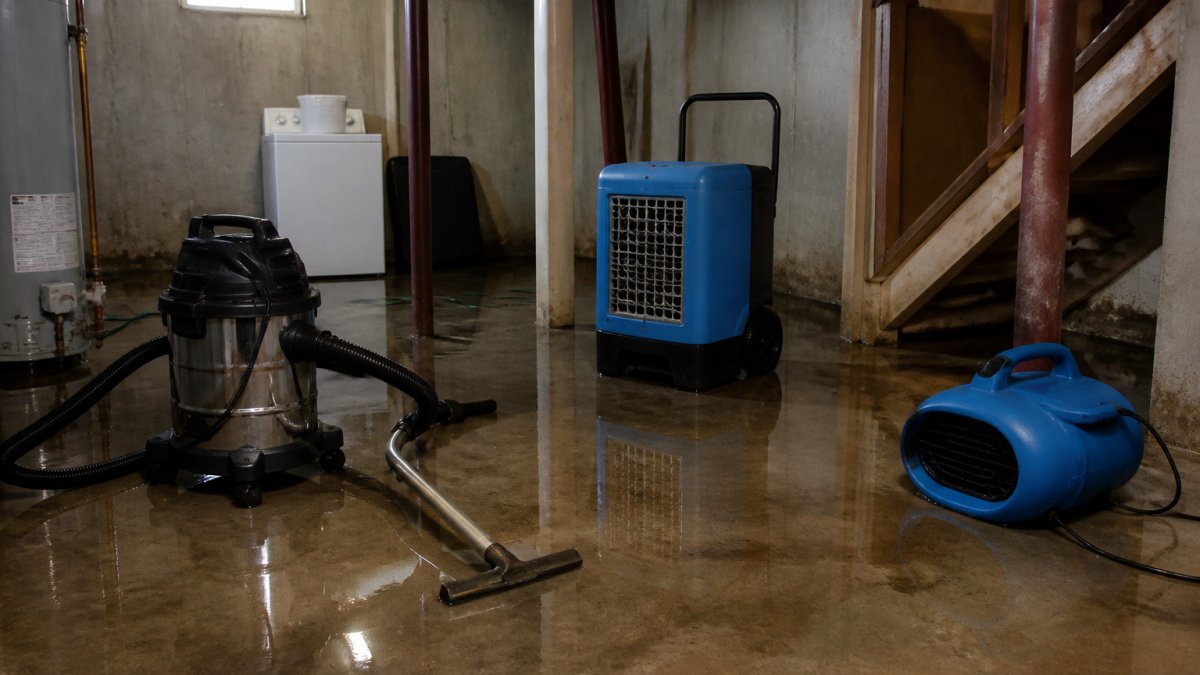
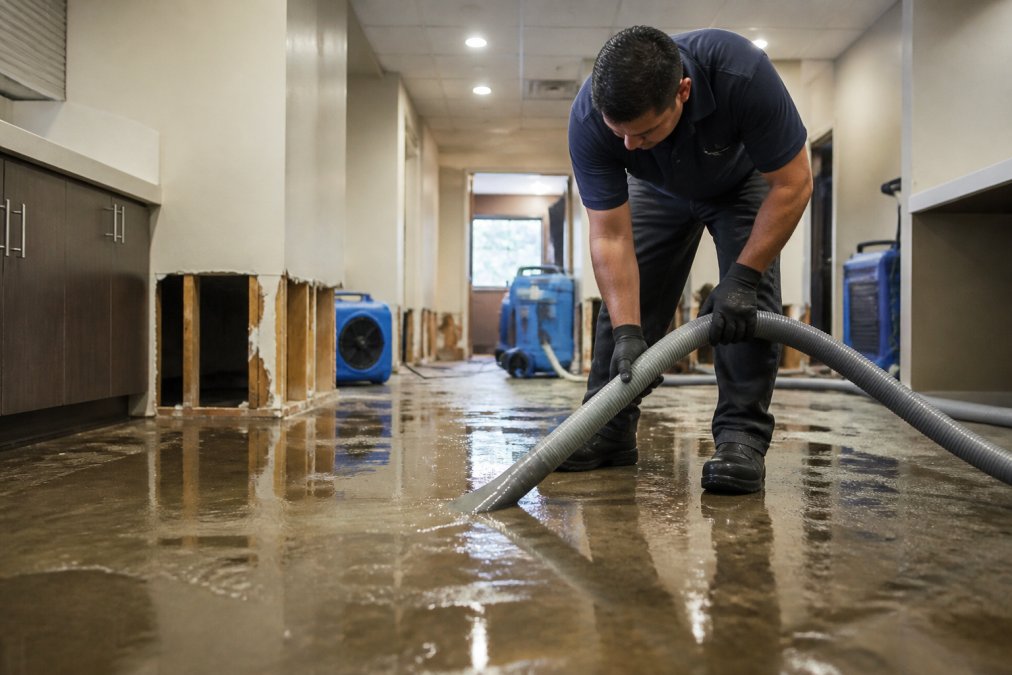
Professional water extraction uses industrial-grade equipment that removes water far more effectively than standard pumps or wet vacuums. Extraction technicians deploy submersible pumps and truck-mounted extraction systems that pull water from carpet, concrete, and structural materials. This process is called water mitigation, it stops the damage from spreading while the actual restoration work begins.
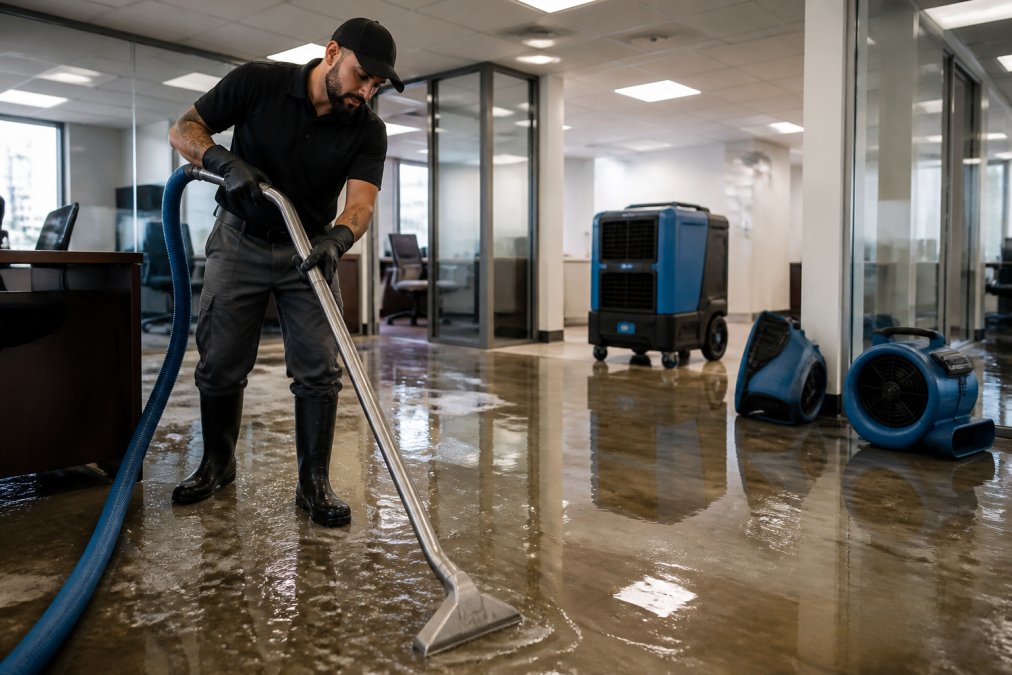
After water extraction comes moisture mapping. Technicians use thermal imaging and moisture meters to identify hidden moisture in walls, ceilings, and subfloors. Water doesn't stay where you can see it, it wicks into structural materials and creates pockets of moisture that lead to mold if left untreated. Moisture mapping reveals these hidden problem areas before they become costly complications.
Disaster Services responds to emergency water extraction calls 24/7 because delay means exponential damage. Our certified technicians arrive with truck-mounted extraction equipment and begin water removal immediately.
Water Damage Restoration Timeline: What to Expect
Understanding the water damage restoration timeline helps you plan for business continuity and set realistic expectations with your insurance company. Most commercial water damage restoration takes between 5 to 14 days, depending on the extent of damage, building size, and complexity of drying requirements.
Days 1-2: Extraction and initial assessment. Water removal begins immediately. Technicians extract standing water, document damage, and set up industrial dehumidifiers and air movers. Moisture mapping identifies hidden wet areas in walls and structural systems.
Days 3-5: Structural drying. Dehumidifiers run continuously to pull moisture from building materials. Air movers circulate dry air to accelerate evaporation. Technicians monitor moisture levels daily and adjust equipment placement as needed. This phase is where most of the actual drying happens.
Days 6-10: Remediation and restoration. Once moisture levels drop to acceptable ranges, removal of damaged materials begins. Wet drywall, carpet, and insulation are cut out and replaced. HVAC systems are inspected and cleaned to remove any contamination from flood water.
Days 11-14: Final cleanup and restoration. Painting, flooring installation, and fixture replacement complete the process. Final inspections confirm moisture levels are within normal ranges and mold remediation is complete.
This timeline assumes straightforward water damage with no structural complications. Category 3 water (black water from sewage or contaminated sources) requires additional sanitization steps and extends the timeline by several days.
Structural Drying and Dehumidification Process
Structural drying is where the technical work of water damage restoration actually happens. It's not visible or dramatic, but it's essential. Without proper structural drying, moisture remains trapped in building materials and creates the conditions for mold growth months after the initial incident.
Industrial dehumidifiers remove moisture from the air in affected spaces. These aren't the small units you'd use in a basement, commercial-grade dehumidifiers process thousands of cubic feet of air per hour and pull gallons of water from the environment daily. Air movers work alongside dehumidifiers to circulate dry air and accelerate evaporation from surfaces and materials.
Technicians use moisture meters to track progress. They measure moisture content in drywall, concrete, wood, and other materials at regular intervals. When moisture levels drop to normal ranges for your climate, drying is complete. This data-driven approach prevents premature reopening of spaces that still contain hidden moisture.
Thermal imaging reveals temperature variations that indicate moisture pockets. Wet areas stay cooler than dry areas because evaporating water absorbs heat. Thermal cameras help technicians locate and focus equipment on problem areas that standard moisture meters might miss.
HVAC systems require special attention during drying. Water contamination in ductwork and equipment can spread mold spores throughout your building if not properly cleaned. Many restoration companies miss this step, which is why smoke odor or musty smells persist months after visible water damage appears resolved.
Mold Remediation and Sanitization
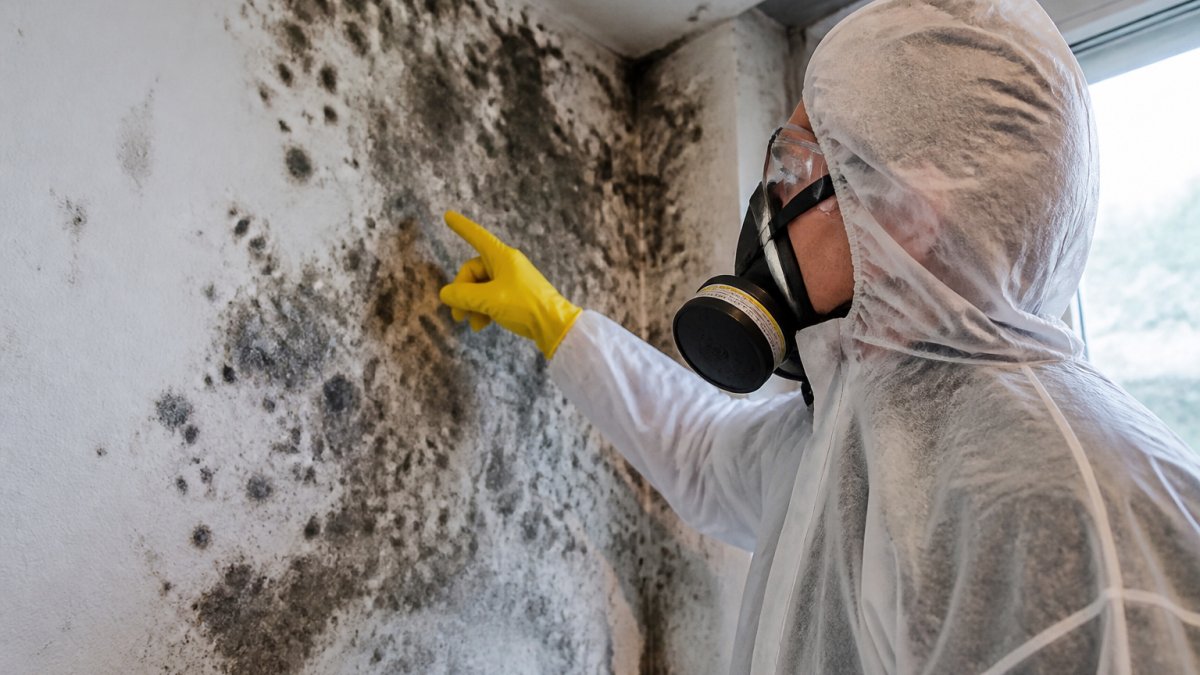
Mold growth begins within 24 to 48 hours in wet environments (the EPA). This isn't a risk to manage, it's a certainty. Mold remediation must be part of your water damage restoration plan from the start, not an afterthought.
Professional mold remediation involves containment, removal, and treatment. Affected areas are sealed off with plastic barriers to prevent mold spores from spreading to uncontaminated spaces. HEPA filtration equipment captures airborne spores during removal. Contaminated materials like drywall and carpet are physically removed and disposed of according to regulations.
After material removal, surfaces are treated with antimicrobial solutions to kill any remaining mold spores and prevent regrowth. This sanitization step is what separates professional remediation from basic cleaning. Surface cleaning alone doesn't eliminate mold, it requires chemical treatment of affected areas.
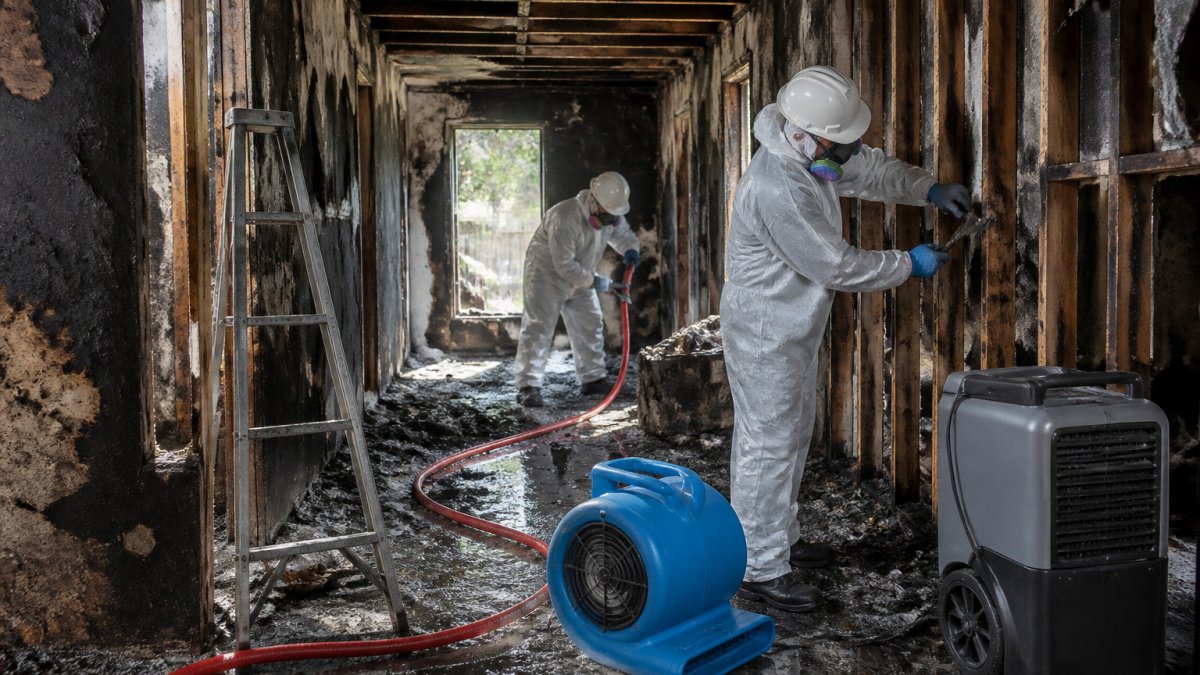
Category 3 water (black water from sewage or flood sources) requires additional decontamination beyond standard mold remediation. All affected materials must be removed and disposed of properly. Surfaces are sanitized to eliminate pathogens and biohazards. This is why professional restoration is essential for contaminated water, the health risks are too high for DIY approaches.
Commercial Property Disaster Planning to Prevent Future Loss
Disaster planning isn't glamorous, but it's the most cost-effective form of water damage prevention. A property that floods once will flood again unless the underlying vulnerability is addressed. Disaster planning identifies those vulnerabilities and creates systems to prevent or minimize future incidents.
Start with a facility audit. Identify potential water sources: roof condition, drainage systems, pipe locations, HVAC condensation lines, and flood risk from surrounding areas. Inspect these systems quarterly. A small leak caught during inspection costs hundreds to fix. That same leak left unattended becomes a water damage event costing tens of thousands.
Backup power systems keep sump pumps and drainage equipment operating during power outages. Many flood events coincide with severe weather that knocks out power. Without backup power, your drainage systems stop working at the exact moment you need them most.
Automated water detection systems alert you to leaks before they become disasters. Sensors placed near water sources, HVAC systems, and in basements trigger alarms when moisture is detected. Early warning gives you hours to respond instead of discovering the problem after water has saturated structural materials.
Emergency response protocols ensure your team knows what to do immediately after water damage occurs. Designate someone responsible for calling emergency restoration services. Have contact information readily available. Know where your water shut-off valve is located.
Insurance Claims and Post-Restoration Documentation
Insurance claims for commercial water damage are complex. Your insurer needs proof of damage, proof that restoration was necessary, and documentation that the work was completed properly. Without this documentation, claims get denied or underpaid.
Choosing the Right Restoration Partner
Not all water damage restoration companies are equally prepared to handle commercial properties. The difference between a qualified restoration partner and an unprepared one is the difference between recovery in days and disaster lasting months.
Frequently Asked Questions
What should I do immediately after discovering water damage in my commercial property?
Stop the water source if safe to do so, evacuate employees if necessary, and contact emergency restoration services immediately. Document the damage with photos and videos for your insurance claim. Avoid walking through contaminated water, especially category 3 water (black water) that may contain pathogens. Move critical equipment and documents to dry areas if possible. Professional mitigation teams can begin water extraction and structural drying within hours to prevent mold growth and further property damage.
How long does commercial water damage restoration typically take?
The water damage restoration timeline depends on the extent of damage, affected area size, and property type. Initial water extraction takes 24-48 hours, structural drying and dehumidification typically requires 3-7 days, and mold remediation and sanitization may add 1-2 weeks. Complete restoration including repairs and rebuilding can range from weeks to months for severe damage. Your restoration company should provide a detailed timeline after the damage assessment and will adjust expectations based on moisture mapping results and dehumidification progress.
Will my commercial property insurance cover water damage restoration costs?
Most commercial property insurance policies cover sudden, accidental water damage from burst pipes, storms, or firefighting efforts. However, coverage typically excludes gradual leaks, flooding, and maintenance-related damage. Your policy limits, deductible, and specific exclusions determine your out-of-pocket costs. Professional restoration companies provide comprehensive insurance claims assistance, including damage documentation, loss assessment, and direct communication with adjusters. Review your policy details and contact your insurance agent to understand your coverage before disaster strikes.
What makes professional commercial water damage restoration different from DIY cleanup?
Professional restoration teams use industrial-grade equipment like thermal imaging for moisture detection that DIY methods cannot match. Certified technicians understand category 3 water hazards, proper sanitization protocols, and structural drying requirements to prevent hidden mold growth and pathogens. They also manage the entire disaster recovery process, from emergency response through insurance claims and rebuilding, minimizing business disruption and ensuring your facility meets safety standards.