 comparison
Rapid Response Alternative for Homeowners: 2026 Guide
Table of Contents
- Rapid Response Alternatives for Homeowners: What to Compare First
- Quick Comparison: Top Rapid Response Alternatives for Homeowners
- Disaster Services: Locally Owned Rapid Response Alternative
- Restoration Company Response Time: What to Expect and How to Verify It
- Home Restoration Insurance Claims: How the Right Partner Helps
- Questions to Ask a Restoration Company Before You Sign
- Restoration Company Comparison Checklist for Homeowners
- Which Rapid Response Alternative Fits Your Home and Risk Profile?
- Frequently Asked Questions
Last Updated: October 17, 2026
Rapid Response Alternatives for Homeowners: What to Compare First
When a pipe bursts, most homeowners search for a national name they recognize, an instinct that costs time water damage does not give back. A rapid response alternative is a locally owned restoration firm that answers the same emergency call but works the claim, crew, and schedule from inside your community rather than a distant dispatch center.
At Disaster Services, we built our operation around that difference. Here is what separates one emergency restoration partner from another, and how to compare them before you need one.
Why a Local Alternative Often Beats a National Chain
National restoration chains win on brand recognition and lose on the details that matter during an emergency.
Local firms compete on reputation in the neighborhoods they serve. A locally owned company cannot afford a slow response or mishandled claim, because the next referral comes from a neighbor, not a national ad budget.
The gap is not equipment, both types own extraction units and dryers. The gap is decision authority.
Quick Comparison: Top Rapid Response Alternatives for Homeowners
Before comparing options, pin down what you are comparing. "Rapid Response" describes three different things: (1) a 24/7 emergency mitigation dispatch service, (2) a subscription-based home emergency plan sold through utilities or home-warranty providers, and (3) a branded national restoration network.
Use the table below as a decision screen, not a shopping list.
| Option | What It Covers | Typical Upfront Cost | Ongoing Cost | Response Expectation | Best For | Watch Out For |
|---|---|---|---|---|---|---|
| Locally owned full-service restoration firm | 24/7 water extraction, structural drying, fire and smoke, mold, rebuild, claims documentation | No charge for initial inspection at most firms; mitigation billed to insurer or homeowner | None beyond the job | Crew on site within a few hours in most metro areas; confirm in writing | Homeowners who want one accountable team from emergency through rebuild | Regional coverage; vet licensing and insurance |
| National restoration chain (franchise or corporate) | Emergency mitigation and rebuild through a network | Same inspection model; pricing set by franchise | None beyond the job | Call-center dispatch; arrival depends on local franchise availability | Households outside any local firm's coverage | Decision authority often sits with a regional manager |
| Home emergency subscription plan (utility, warranty, or standalone) | Capped emergency repairs (HVAC, plumbing, electrical) and referrals | Monthly or annual subscription, commonly in the low tens of dollars per month | Recurring subscription | Varies; often a referral rather than a dispatched crew | Small, predictable repairs rather than catastrophic loss | Per-incident caps, exclusions, and dispatch to a contractor you did not choose |
| Independent local competitor | Varies widely by firm | Varies | Varies | Varies | Price-sensitive homeowners who vet carefully | Inconsistent licensing, insurance, and claims support |
| Insurance comparison service | Policy shopping, not restoration | Free to the consumer | None | No emergency response | Lowering premiums before a loss | Does not extract water or dry a wall |
| Consumer insurance guide | Coverage education | Free | None | No emergency response | Understanding what a policy pays | No quotes and no restoration work |
The distinction that trips people up: subscription plans and insurance tools are not restoration alternatives.
Eligibility, Service Area, and Response-Time Expectations
Every category above has a gate to clear:
- Service area. Local firms publish a county or metro boundary; national chains route by ZIP code through a franchise territory. Confirm your exact address, not just your city.
- Incident type. Most restoration firms handle water, fire, smoke, mold, and storm damage. Subscription plans typically exclude catastrophic loss and cap per-incident payouts. Read the exclusions list, not the marketing page.
- Response window. Reputable firms aim for a crew on site within a few hours; ask for the documented dispatch-to-arrival window in writing, including nights and weekends.
Total Cost of Ownership
Compare the full cost, not the headline number:
- Upfront. Most restoration firms charge nothing for an initial visual inspection; mitigation and drying are billed to your insurer or to you.
- Subscription. A home emergency plan commonly runs in the low tens of dollars per month, but the value depends entirely on the per-incident cap and exclusions.
- Installation and maintenance. Leak sensors and shutoff valves carry hardware, installation, and occasional upkeep costs.
Insurance and Local-Code Considerations
Your choice of protection can affect insurance and compliance:
- Discounts. Many carriers offer premium credits for monitored leak detection, water shutoff devices, and certain roof or wildfire mitigations. Ask your carrier which credits it recognizes before you buy hardware.
- Claims. Document the loss the way an adjuster expects to read it: moisture readings with timestamps, before-and-after photographs, an itemized scope, and a clear cause-and-damage link.
- Codes. Repairs and rebuilds must meet current local building and fire codes; a firm that pulls permits and knows your jurisdiction saves you a second inspection later.
Independent Testing and Measurable Performance
Distinguish proven protection from marketing claims by asking for verifiable measures: documented response windows, moisture readings against a defined dry standard, and references from recent local jobs. For hardware, look for third-party testing and certification, not manufacturer claims.
Disaster Services: Locally Owned Rapid Response Alternative
Disaster Services is a locally and family owned restoration firm serving residential and commercial properties across the Greater Houston area, available around the clock for water extraction, structural drying, fire and smoke damage restoration, and mold remediation.
The practical difference shows up in three places. First, our technicians are licensed and insured, and we provide a free visual inspection before any equipment is staged.
Where we fall short: our coverage is regional. If you own property outside the Greater Houston area, we are not your answer, and we would rather say so than waste your emergency call.
Homeowners and commercial property owners in the Greater Houston area who want one licensed, insured team handling mitigation, drying, claims support, and rebuild.
Restoration Company Response Time: What to Expect and How to Verify It
Response time is the most consequential number in any restoration contract, and the most frequently exaggerated.
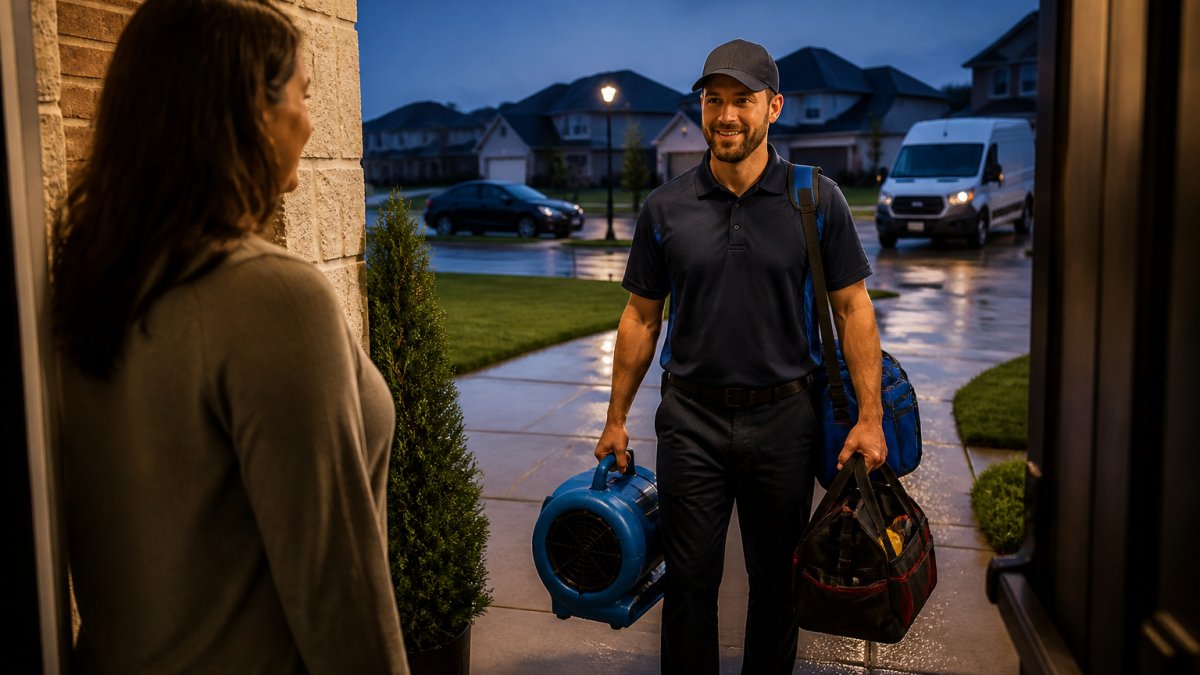
Get the window documented in the estimate or service agreement, along with the on-call number you will actually dial at 2 a.m.
Home Restoration Insurance Claims: How the Right Partner Helps
Home restoration insurance claims move faster when the restoration firm documents the loss the way an adjuster expects to read it: moisture readings with timestamps, before-and-after photographs, an itemized scope, and a clear cause-and-damage link.
A restoration partner that handles claims routinely submits documentation in the format carriers want, reducing back-and-forth and the risk of a partial denial.
Ask directly: does the firm bill your carrier directly, and what happens if the approved scope is smaller than the damage found? The National Association of Insurance Commissioners consumer resources explain how the claims process and your policy obligations work, and it is worth reading before you sign anything.
What Your Policy Actually Pays, and What It Doesn't
Most homeowners policies cover sudden and accidental water damage, such as a burst supply line, but exclude long-term seepage, repeated leaks, and neglected maintenance. Flood damage from rising water is generally excluded from a standard homeowners policy and requires separate flood coverage. The Insurance Information Institute's guidance on homeowners claims is a useful cross-check on what your carrier expects from you during a claim.
Insurance Discounts and Credits Worth Asking About
Many carriers recognize protective devices with premium credits. Ask your agent which of these your policy credits before you buy:
- Monitored leak detection and automatic water shutoff devices
- Smart smoke and carbon monoxide detectors tied to a monitoring service
- Certain roof, wildfire-mitigation, and storm-shutter improvements
Credits vary by carrier and state, so confirm the specific device and installation standard your insurer requires.
Code Compliance and Permits
Repairs and rebuilds must meet current local building and fire codes, and many jurisdictions require permits for structural, electrical, and plumbing work. A firm that pulls permits and knows your jurisdiction prevents a failed inspection and a second round of work. Ask whether it handles permits and whether inspection costs are included in the scope.
Total Cost of Ownership for the Claim
Compare the full picture, not the estimate headline:
- Deductible. You pay this before the carrier pays anything; know the amount and whether a separate hurricane or wind deductible applies.
- Coverage limits. Confirm the dwelling limit and any sublimits for mold, water backup, or ordinance-and-law upgrades.
- Out-of-pocket. Ask what is excluded from the estimate and what could change the final figure.
Decision Guidance by Home and Risk Profile
- Single-family home in a metro area with a local firm available: choose a licensed, insured local restoration firm with a documented response window and claims support.
- Rural or outside any local firm's coverage: a national chain or a vetted independent is the realistic option; run the checklist above.
- Condo or townhome: confirm who is responsible for walls-in versus walls-out damage and coordinate with the HOA or building insurer.
Questions to Ask a Restoration Company Before You Sign
Ask these before anyone stages equipment, and write down the answers.
- Are you licensed and insured, and can I see the certificate?
- What is your documented response window, including nights and weekends?
- Who is my single point of contact from mitigation through rebuild?
The Insurance Information Institute's guidance on homeowners claims is a useful cross-check on what your carrier expects from you during a claim.
Restoration Company Comparison Checklist for Homeowners
Use this checklist to score each firm you consider. A firm that cannot answer a line scores zero on it.
- Licensed and insured, with documentation provided
- 24/7 emergency availability confirmed in writing
- Documented response window, including after hours
Which Rapid Response Alternative Fits Your Home and Risk Profile?
Match the option to your situation, not a brand name.
If your goal is lowering premiums before a loss, use an insurance comparison service and a coverage guide. Those tools prepare you financially; they do not respond to a burst pipe.
The honest summary: the best rapid response alternative is the firm that can prove its response window, document your claim properly, and finish the rebuild without handing you off.
Frequently Asked Questions
How quickly should a restoration company respond to water damage?
Most restoration companies aim to arrive within 1 to 4 hours of your call, and a good rapid response alternative will confirm a window when you book. Mold can begin growing within 24 to 48 hours of water exposure, so the first few hours matter. Ask the dispatcher for a written arrival window, confirm whether the crew is local or driving in from another market, and get the name of the technician assigned to your job so you can follow up.
Does homeowners insurance cover emergency restoration services?
Standard homeowners policies usually cover emergency mitigation when the damage comes from a covered event like a burst pipe, storm, or fire. Coverage typically includes water extraction, drying, and temporary repairs to prevent further damage. Save every receipt and document the damage with photos before cleanup starts. A restoration partner that handles home restoration insurance claims directly can submit documentation to your adjuster and reduce the risk of a denied or delayed claim.
What should homeowners look for in a rapid response alternative?
Look for 24/7 availability, a confirmed response window, licensed and insured technicians, and a company that handles both mitigation and rebuild so you are not coordinating multiple contractors. Ask whether the inspection is free, how they document findings for your insurer, and whether they are locally owned. Local ownership often means faster arrival and a team that knows the regional building codes and common storm patterns affecting your property.
How do I compare restoration companies after a house fire or flood?
Use a restoration company comparison checklist: confirm licensing and insurance, ask for a written scope of work, compare response times, and check whether insurance claim support is included. Get at least two written estimates and ask each company how they handle change orders if hidden damage appears. Verify credentials through your state licensing board and ask for references from jobs similar to yours. A company that explains its process clearly before you sign is usually the safer pick.
What questions should I ask before hiring a restoration contractor?
Ask how fast they can arrive, whether technicians are licensed and insured, and who handles the insurance paperwork. Confirm whether they perform both mitigation and reconstruction or subcontract the rebuild. Ask how they document moisture and mold findings so you can see the evidence, not just a verbal claim. Finally, ask for a written estimate, a timeline, and the name of a project manager you can reach directly during the job.
Water damage and fire damage get more expensive with every hour that passes, and the wrong partner adds delay on top of the loss. Disaster Services provides 24/7 emergency response, free visual inspection, licensed and insured technicians, and full insurance claims assistance from first call through completed rebuild. Contact Disaster Services today and get a crew moving toward your property instead of a call center script.