 ultimate-guide
Water Damage Insurance Claim Tips for 2026
Table of Contents
- Water Damage Insurance Claim Tips: First 24 Hours
- How to Document Water Damage for Insurance
- Emergency Mitigation: Stop Further Damage
- Understanding Your Policy Coverage
- Is Mold Remediation Covered by Homeowners Insurance?
- Water Damage Claim Denial Reasons
- Frequently Asked Questions
Last Updated: September 16, 2026
Water Damage Insurance Claim Tips: First 24 Hours
The first 24 hours after a water loss decide how much your insurer pays and how much you absorb. This guide from Disaster Services covers the water damage insurance claim tips that matter most in that window, from stopping the source to documenting everything before it dries. Water damage insurance claims reward speed and documentation, and punish hesitation.
Safety First: Stop the Water Source
Stop the flow first. Shut off the main water valve, or the fixture supply valve if you can isolate the leak, for a burst pipe, the main shutoff is your fastest move.
- Burst pipe or supply line: close the main valve, then open a low faucet to drain remaining pressure.
- Water heater failure: shut off the gas or power, then the cold inlet valve.
- Appliance leak: pull the plug only if the outlet is dry, then close the supply valve behind the unit.
- Roof or window intrusion: contain what you can with buckets and towels, but do not climb onto a wet roof.
Call Your Insurer and a Restoration Pro
Call your insurer the same day. Most homeowners policies require prompt notice of a loss, and delays let an adjuster question whether you mitigated the damage.
Have these ready before you dial:
- Policy number and date of loss
- The water source and whether it is still active
- A rough count of affected rooms
- Whether anyone is displaced
How to Document Water Damage for Insurance
Documentation is the single strongest lever you control in a water damage insurance claim. Photograph everything before you move, discard, or dry a single item. Insurers pay on evidence, not memory.
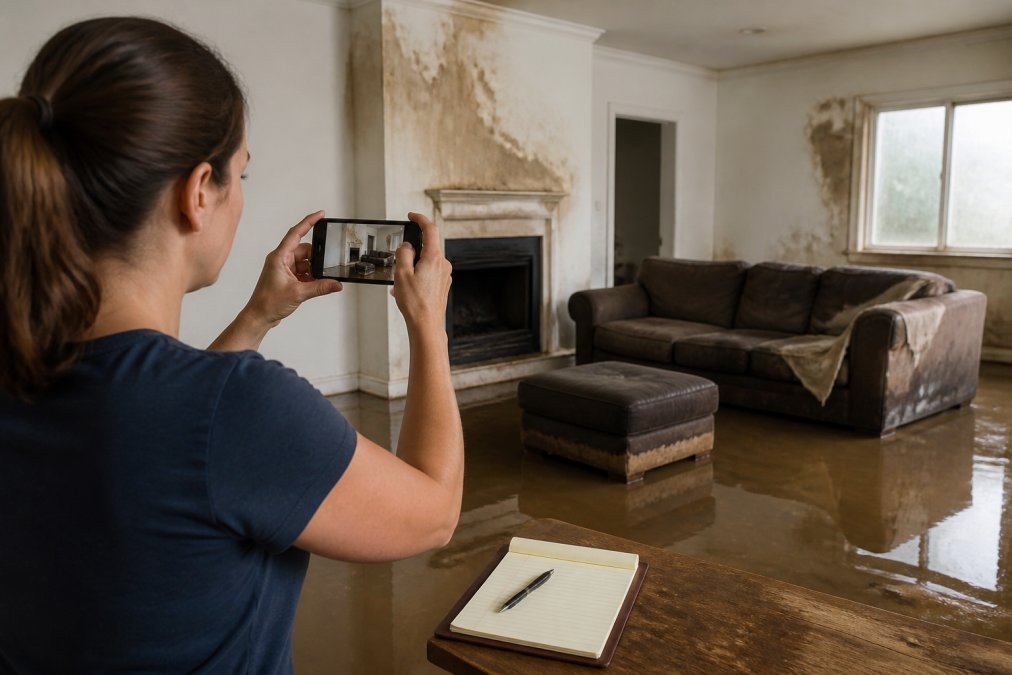
Photos, Videos, and an Inventory List
| Column | What to Enter |
|---|---|
| Item | "Samsung 55-inch TV, living room" |
| Approx. age | "3 years old" |
| Condition before loss | "Working, no damage" |
| Replacement cost | Retail price to buy new today |
| Photo reference | File name or number |
Keep every receipt, hotel nights, meals during displacement, fans, tarps, emergency repairs. These are often reimbursable under additional living expenses or loss-of-use coverage.
Emergency Mitigation: Stop Further Damage
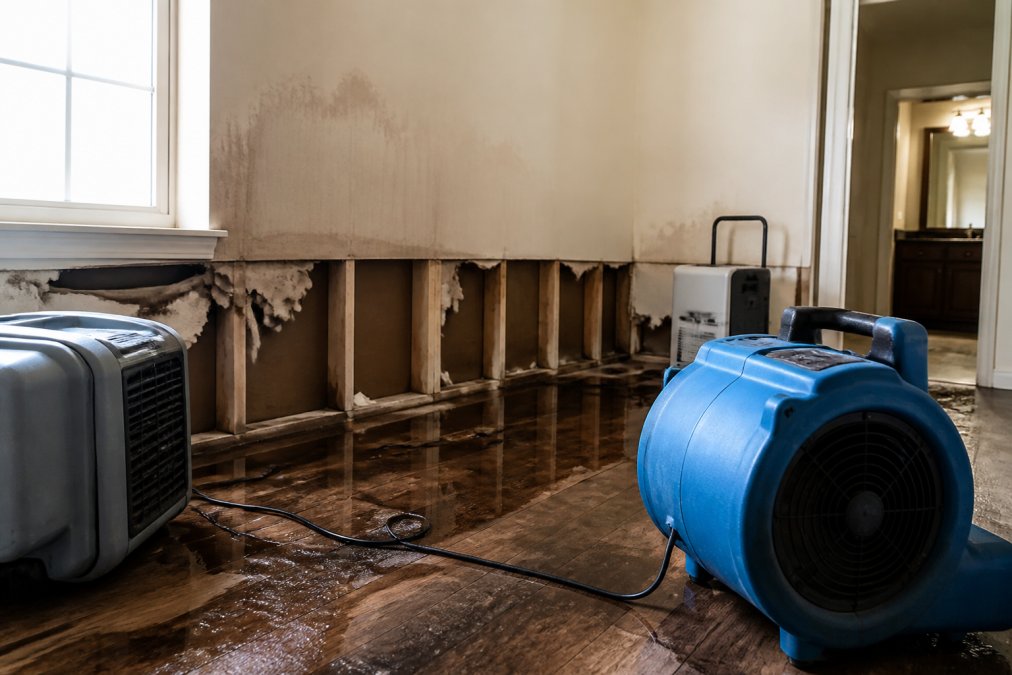
Mitigation means the reasonable steps you take to limit the loss after the water stops. Your policy expects it, and skipping it can reduce your settlement. The goal is to halt moisture before it becomes mold growth and structural damage.
What you can do yourself:
- Move furniture, rugs, and electronics off wet carpet
- Blot standing water with towels and a wet vacuum
- Run fans and a dehumidifier if power is safe
- Prop up wet cushions and separate salvageable items to dry
- Remove saturated cardboard and paper immediately
Understanding Your Policy Coverage
Your homeowners policy is a set of coverages with different limits. Knowing which bucket your loss falls into prevents surprises at settlement.
- Dwelling coverage pays to repair the structure: drywall, flooring, framing, and built-in fixtures.
- Personal property coverage pays for belongings, usually at actual cash value unless you bought replacement cost coverage.
- Loss of use pays for temporary housing and extra living costs while your home is uninhabitable.
- Deductible is your out-of-pocket floor before the insurer pays anything.
ACV vs. Replacement Cost: The Math That Decides Your Payout
Most guides tell you to "check whether you have replacement cost coverage." That is not enough. You need to understand how the two settlement methods are calculated, because the difference on a single claim can run into the thousands.
Recoverable Depreciation: The Second Check Most Homeowners Miss
If you carry replacement cost coverage, many policies pay in two stages:
- First payment (ACV): the insurer pays replacement cost minus depreciation shortly after the claim is approved.
- Second payment (recoverable depreciation): once you actually repair or replace the item and submit the receipt, the insurer releases the withheld depreciation.
Other Policy Terms That Move Your Number
- Sub-limits: categories like jewelry, electronics, or mold often have a cap far below your overall personal property limit.
- Ordinance or law coverage: pays for code upgrades required when you rebuild (for example, bringing older wiring up to current code after a wall is opened). Without it, you absorb those costs.
- Matching: some policies pay to replace undamaged materials so the repair matches the rest of the room; others do not. Ask in writing.
If you are unsure what your policy covers, request the specific policy language in writing before you sign anything, a written answer is far harder to walk back than a phone conversation.
Is Mold Remediation Covered by Homeowners Insurance?
Mold remediation is often covered only when the mold traces to a covered, sudden and accidental water event, and even then, many policies cap the payout. The answer to "is mold remediation covered by homeowners insurance" depends almost entirely on the water source and how quickly you acted.
Water Damage Claim Denial Reasons
Most water damage claim denials come down to avoidable mistakes: late reporting, missed mitigation, or an excluded cause. Knowing the common denial reasons lets you close those gaps before you file.
- Long-term seepage: slow leaks the policy classifies as neglect, not a sudden event
- Failure to mitigate: you left standing water or did not dry the space
- Missed deadlines: you reported the loss after your policy's notice window
- Excluded cause: flooding, which requires separate flood coverage, not a standard homeowners policy
- Insufficient documentation: no photos, no receipts, no inventory list
Seepage vs. Sudden Discharge: The Distinction That Decides Most Denials
This is the most common battleground in water damage claims. Policies typically cover "sudden and accidental discharge" from a plumbing system but exclude "constant or repeated seepage or leakage" occurring over 14 days or more. The same pinhole leak can be covered or denied depending on how long it ran before you discovered it.
What tips the scale toward coverage:
- A dated record of when you first noticed the water (a photo timestamp, a text to a family member, a plumber's invoice)
- Evidence the damage was localized and fresh (clean waterlines, no staining, no musty odor)
- Prompt reporting and immediate mitigation
What tips it toward denial:
- Staining or warping that suggests weeks of slow exposure
- A history of the same leak on prior claims
- Statements like "it has probably been leaking for a while"
How to Appeal a Denied or Underpaid Claim
A denial is not the end of the process. Work through these steps:
- Request the denial in writing. Ask for the specific policy language the insurer cited and the factual basis for the decision.
- Review the cited language against your policy. Denials are sometimes based on the wrong exclusion or a misreading of the loss date.
- Submit a written appeal through the insurer's internal process, attaching your photos, receipts, inventory, and any professional reports.
- Escalate to the state department of insurance. Every state has a consumer complaint process; filing one creates a documented record and often prompts a second look.
- Consider appraisal or mediation. Many policies include an appraisal clause that lets you and the insurer each hire an independent appraiser when you disagree on the amount of loss (as opposed to whether it is covered).
Public Adjuster vs. Company Adjuster
A company adjuster works for and is paid by the insurer. A public adjuster works for you and is typically paid 10% to 20% of the settlement, though caps vary by state and some states restrict when one can be hired. A third-party or independent adjuster is a contractor the insurer hires to handle overflow; they still represent the insurer.
When a public adjuster is worth considering:
- The claim is large (major structural damage, extensive contents loss)
- The insurer's offer is far below your documented repair estimates
- The denial hinges on a technical coverage question you cannot resolve alone
When it is not:
- The claim is small and the settlement is close to your estimate, the fee will eat the gain
- The dispute is about coverage, not amount, a public adjuster cannot force coverage where the policy excludes it
What Not to Say to an Insurance Adjuster
Keep your statements factual and narrow: say what you saw, when you saw it, and what you did. Do not speculate about the cause, guess at a timeline, or say the damage "has been like that for a while."
Avoid these phrases:
- "It's probably been leaking for months." This invites a seepage denial.
- "I think it might be my fault." Do not assign fault before an inspection.
- "I haven't had time to clean it up." This signals a failure to mitigate.
- "Just tell me what to write." Never let an adjuster draft your account for you.
Frequently Asked Questions
What not to say to an insurance adjuster after water damage?
Avoid saying the damage is 'just a small leak' or that you 'noticed it a while ago.' These statements can be used to deny your claim for seepage or lack of maintenance. Instead, describe the event as sudden and accidental, and stick to facts. Do not speculate about the cause or admit fault. If you are unsure, say you will provide documentation later. Keep all communication in writing when possible.
How can I maximize my water damage insurance claim?
Document everything with photos, videos, and receipts before cleanup. Keep a detailed inventory of damaged items, including age and value. Mitigate further damage by calling a professional restoration company, and save all receipts for emergency repairs. Understand your policy limits and deductibles. If your claim is denied or undervalued, consider hiring a public adjuster. Provide written correspondence and request a copy of the adjuster's report.
What is the biggest mistake homeowners make during the water damage claims process?
The biggest mistake is starting cleanup or repairs before the adjuster inspects the damage. This can destroy evidence needed to prove your loss. Another common error is not documenting the damage thoroughly. Homeowners also fail to read their policy exclusions, leading to surprise denials. Always wait for the adjuster's inspection, and keep a paper trail of all communications and expenses.
Does homeowners insurance cover sudden water damage versus long-term leaks?
Most homeowners policies cover sudden and accidental water damage, like a burst pipe. Long-term leaks or seepage are typically excluded because they are considered maintenance issues. Mold growth from a long-term leak is also often excluded. Review your policy for specific exclusions. If you are unsure, ask your agent before filing a claim. Document the date you discovered the damage to show it was sudden.
What documentation is required to support a water damage claim?
You will need photos and videos of the damage, a written inventory of damaged items with values, receipts for emergency repairs, and proof of loss forms. Also keep any correspondence with your insurer, including emails and letters. If you hired a professional restoration company, provide their reports and invoices. The more detailed your documentation, the smoother your claim settlement.
How long does the typical water damage insurance claim process take?
The timeline varies by insurer and claim complexity. Simple claims may settle in a few weeks, while complex ones can take months. After you file, the adjuster typically inspects within days. Then you may need to provide additional documentation. Delays happen if there are disputes over coverage or the scope of damage. Stay proactive and follow up regularly with your adjuster.