 how-to
7 Signs Black Mold Is Dangerous to Breathe
Last Updated: November 1, 2026
Quick Summary
Yes, breathing black mold can be dangerous, but the risk depends on who you are and how much you breathe in. Black mold spreads through airborne spores and moisture-damaged materials, and it mainly causes allergic reactions, asthma flare-ups, and respiratory irritation rather than poisoning.
- Risk climbs for children, older adults, people with asthma, allergies, or lung disease.
- Seek urgent care for trouble breathing at rest or chest tightness that does not ease.
- Fix the moisture source first, because mold returns without it.
- Arrange professional assessment when mold covers more than a small patch or sits on drywall.
- Claims that mold causes memory loss go beyond what the evidence supports.
Table of Contents
- Is Black Mold Dangerous to Breathe? What the Evidence Shows
- Black Mold Symptoms: What Exposure Can Feel Like
- Who Faces the Highest Risk From Mold Exposure
- What Does Black Mold Look Like, and What Color Cannot Tell You
- How to Remove Black Mold Safely
- Mold Exposure Treatment: What to Do After Breathing Mold
- Mold Toxicity Claims vs. Established Science
- Schedule a Mold Inspection Before Symptoms Get Worse
- Frequently Asked Questions
Is Black Mold Dangerous to Breathe? What the Evidence Shows
Yes, breathing black mold can be dangerous, but the risk depends on who you are and how much you breathe in. Black mold is a loose term for dark-colored mold growth, often Stachybotrys chartarum, that spreads through airborne spores and moisture-damaged building materials.
The honest answer sits between two extremes. Mold is not a rare poison that harms everyone who touches it. It is also not harmless dust you can ignore.
Here is what most guides get wrong: they treat "black mold" as one specific hazard. In practice, the danger comes from three things working together:
- The type of mold and the allergens it carries
- How much mold is present and how long you breathe it
- Your own health history, especially asthma or allergies
A small patch in a damp corner is a moisture problem. A wall of growth behind wet drywall is an indoor air problem. The second one deserves fast action.
Black Mold Symptoms: What Exposure Can Feel Like
Most people exposed to mold report irritation or allergy-type symptoms rather than sudden illness. The CDC guidance on mold and health notes that mold exposure mainly affects people with allergies or lung conditions. Symptoms usually build over time, not overnight.
Respiratory and Allergy Symptoms
Watch for a cluster of symptoms that show up or worsen indoors:
- Cough that lingers, especially in a damp room
- Wheezing or a tight chest
- Shortness of breath during light activity
- Nasal congestion and sneezing
- Throat irritation or a scratchy feeling
- Eye irritation, redness, or watering
- Skin irritation or a rash after contact
These are signs of an allergic reaction or respiratory irritation, not proof of "mold poisoning." A common mistake is assuming one symptom means toxic mold. In practice, patterns matter more than any single symptom.
When Symptoms Signal a Medical Emergency
Most mold-related symptoms are routine and treatable. Some are not. Seek urgent care if you or someone in the home has:
- Trouble breathing at rest
- Chest tightness that does not ease
- A fever with worsening cough
People with asthma should treat sudden breathing changes as urgent. Do not wait to see if it passes.
Who Faces the Highest Risk From Mold Exposure
Not everyone reacts the same way to the same mold. Risk climbs for certain groups, and those people should act sooner and more carefully. High-risk individuals include:
- Children, whose lungs are still developing
- Older adults
- People with asthma, where mold can trigger an asthma attack
- People with allergies or a sensitive immune system
For these groups, even modest mold growth can worsen symptoms. The American Lung Association's information on indoor air quality points out that poor indoor air hits people with lung conditions hardest.
If you fall into a high-risk group and see mold, do not scrub and hope. Reduce exposure first, then get a professional assessment.
What Does Black Mold Look Like, and What Color Cannot Tell You
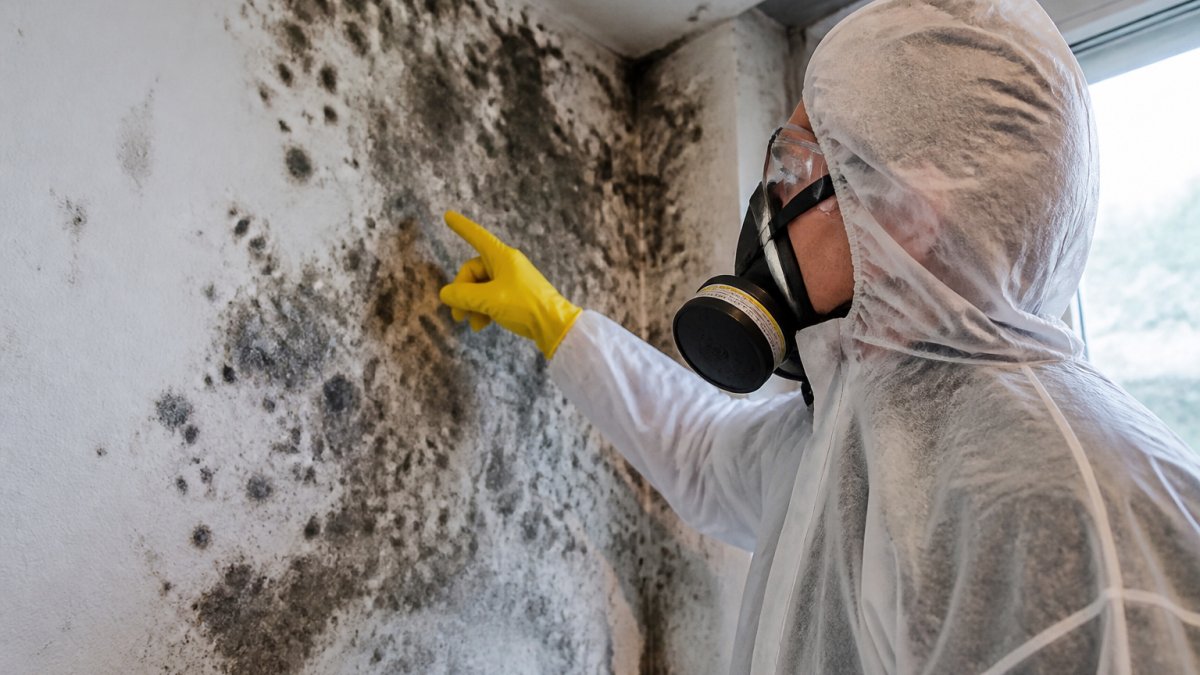
Black mold often looks like dark green or black patches with a slightly slimy or fuzzy surface.
But here is the catch. Color cannot confirm what kind of mold you have. Many mold types look black, and Stachybotrys chartarum is not always easy to spot.
What to look for instead of color:
- A musty, earthy smell
- Water stains or bubbling paint
- Warped drywall or soft spots
- Visible growth near a known leak
If you suspect mold is hiding behind drywall, our guide on signs of mold behind drywall shows where to check and what to photograph before you call anyone.
How to Remove Black Mold Safely
Small surface mold on a hard, non-porous item can sometimes be cleaned. Larger growth, or mold on drywall and insulation, needs professional removal.
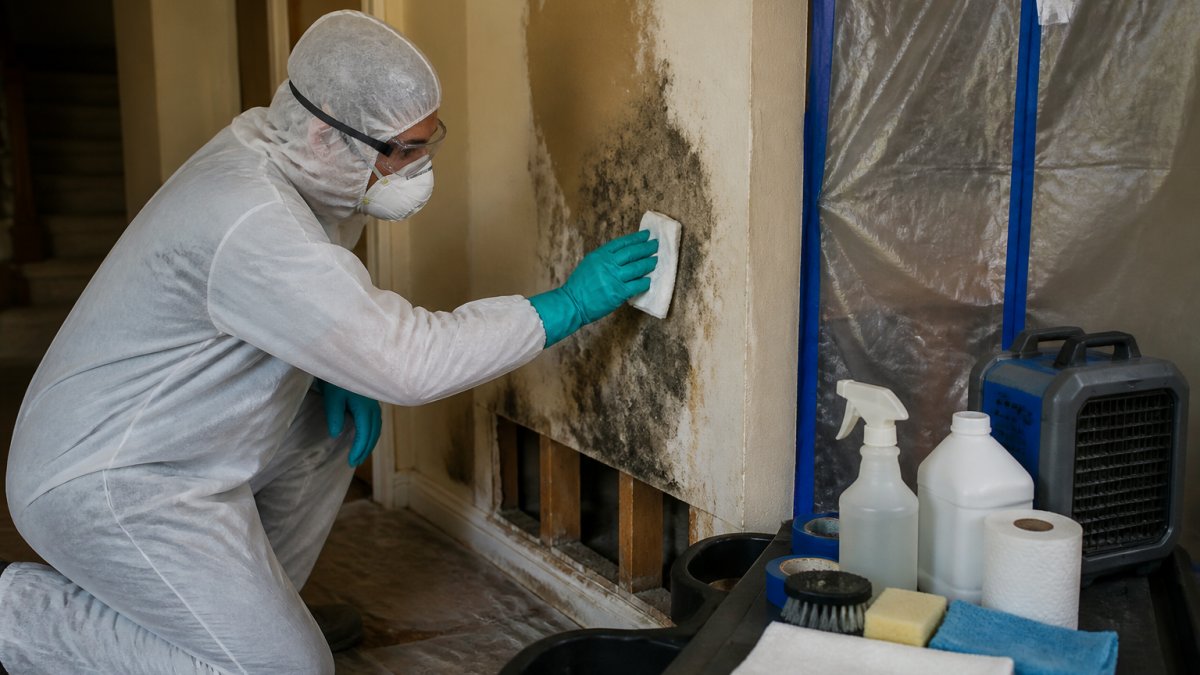
Before you touch anything, decide whether this is a do-it-yourself job or a call-a-professional job. If you are weighing professional help, see our professional mold remediation costs before you decide. If any of the following is true, stop and arrange professional assessment:
- Growth covers more than a small patch, or has spread across multiple rooms
- Mold is on drywall, ceiling tile, insulation, carpet, or other porous material
- You smell a musty odor but cannot find the source
- The building has been wet for more than a couple of days, or has had repeated leaks
For a small patch on a hard surface, follow these steps:
- Fix the leak or moisture source, and confirm the area can dry completely
- Seal off the area with plastic sheeting and tape
- Wear an N95 respirator, goggles, and gloves
- Ventilate with a window or fan, and keep air moving out of the space
- Mist surfaces lightly before wiping to keep spores out of the air
- Clean hard surfaces with soap and water, then dry fully within 24 to 48 hours
- Bag and remove porous materials rather than trying to salvage them
Reducing Exposure During Cleanup
The cleanup itself can stir up spores, and that is often when exposure peaks. Protect your indoor air while you work:
- Keep high-risk people and pets out of the area until surfaces are dry and debris is removed
- Mist surfaces lightly to keep dust down; never dry-scrape or dry-sand mold
- Do not run a standard vacuum over mold; it can exhaust spores back into the room
- Run a HEPA air scrubber or open a window with a fan blowing outward if you have one
Watch out: cleaning mold without stopping the water source usually means it comes back within weeks. When growth covers more than a small patch, or sits behind drywall, book professional mold remediation so the job is done safely and fully.
After Cleanup: Verifying the Job Is Done
A cleanup is not finished when the visible stain is gone. Moisture is the real test. Use a moisture meter on the repaired area, or watch for returning stains, bubbling paint, or a musty smell over the next few weeks. If the smell returns, the source was not fully addressed.
If any of these are true, stop and arrange professional assessment instead of cleaning it yourself.
| Situation | What to do |
|---|---|
| Growth covers more than a small patch or multiple rooms | Arrange professional assessment |
| Mold is on drywall, ceiling tile, insulation, or carpet | Arrange professional assessment |
| Musty odor but no visible source | Arrange professional assessment |
| Building wet more than a couple of days or repeated leaks | Arrange professional assessment |
| Anyone in home has asthma, weakened immune system, or mold allergy | Arrange professional assessment |
| Sewage-contaminated water or Category 3 water loss | Arrange professional assessment |
| Small patch on a hard, non-porous surface | Fix moisture source, then clean with soap and water |
Mold Exposure Treatment: What to Do After Breathing Mold
Treatment for mold exposure focuses on relieving symptoms and cutting off contact with the mold.
Practical steps after exposure:
- Leave the moldy area and get fresh air
- Rinse irritated eyes and skin with water
- Take allergy medication as directed if symptoms are mild
- See a doctor if symptoms persist or worsen
Consult a doctor for a medical evaluation if you have asthma, a weakened immune system, or symptoms that last more than a few days.
To understand how mold affects the body and how to tell if it is making you sick, read more on our mold and health blog.
Mold Toxicity Claims vs. Established Science
Claims about "toxic mold syndrome" and mold causing memory loss go beyond what the evidence supports.
The confusion usually starts with the word "toxic." Some molds, including Stachybotrys chartarum, can produce mycotoxins under certain conditions.
What the evidence does support:
- Mold allergy and allergic reaction
- Asthma symptoms and asthma attacks
- Lung, throat, nose, and eye irritation
- Worsening symptoms in sensitive people
What remains uncertain or overstated:
- "Mold toxicity" as a diagnosed condition
- Memory loss attributed directly to mold
- Broad claims that mold causes unrelated diseases
- Blood or urine "mycotoxin tests" marketed as proof of mold illness
The World Health Organization's guidance on dampness and mold ties damp buildings to respiratory symptoms and asthma, not to the dramatic claims you see online.
How to Read an Alarming Mold Symptom List
When you see a long list of symptoms attributed to mold, ask three questions before you accept it:
- Is the symptom common in people without mold exposure? Fatigue, headache, and brain fog are extremely common and have many causes. A symptom appearing on a mold list does not mean mold caused it.
- Does the source separate correlation from causation? People who live in damp homes often have other exposures, like poor ventilation or dust mites. A symptom that improves after remediation is suggestive, not proof.
- Is the claim backed by a major public health body? If the only sources are supplement sellers or specialty clinics selling testing, treat the claim as unproven.
A useful rule: established effects tend to be things you can feel in your nose, throat, chest, eyes, or skin, and they tend to improve when you leave the damp space. Claims that mold causes conditions in unrelated body systems are where the evidence thins out.
When to See a Doctor About Mold Symptoms
Routine, persistent symptoms such as congestion, cough, or eye irritation that worsen indoors are worth a medical visit, especially if they last more than a few days or keep returning after cleanup.
Bring your observations to the appointment: when symptoms started, which rooms make them worse, whether anyone else in the home is affected, and whether you have seen or smelled mold.
Schedule a Mold Inspection Before Symptoms Get Worse
Mold rarely fixes itself. It spreads as long as moisture is present, and the longer you breathe it, the more your symptoms can build.
At Disaster Services, we offer 24/7 emergency response and licensed and insured technicians. We also provide comprehensive insurance claims assistance. Not sure an inspection is worth it? Our article on whether professional mold inspection is worth it walks through the decision.
Get started with Disaster Services and breathe easier in a safer, cleaner space. Contact us today.
Frequently Asked Questions
Can breathing black mold make you sick?
Yes, for some people. Breathing airborne black mold spores can trigger allergic reactions, asthma attacks, and respiratory irritation in sensitive individuals. The severity depends on exposure duration, concentration, and your immune response. People with allergies, asthma, or weakened immune systems are most vulnerable. If you notice wheezing, coughing, or eye and throat irritation that worsens indoors, consult a doctor and have the mold source inspected and removed.
What are the most common black mold symptoms?
Black mold symptoms typically include nasal congestion, sneezing, coughing, wheezing, shortness of breath, chest tightness, eye irritation, throat irritation, and skin irritation. Some people also report headaches or fever. These symptoms overlap with many other conditions, so a medical evaluation is the only way to confirm a link. If symptoms persist or worsen while you are indoors, document them and consult a doctor.
When should I seek medical care after mold exposure?
Seek urgent care if you experience difficulty breathing, chest pain, severe wheezing, or symptoms that quickly worsen. For milder but persistent symptoms such as a chronic cough, nasal congestion, or skin irritation, schedule a routine medical evaluation. Bring notes on when symptoms started, how long you were exposed, and whether they improve when you leave the building. A doctor can assess your immune response and recommend mold exposure treatment.
What should I do if I find black mold in my home?
First, stop the moisture source, since mold cannot grow without water. Avoid disturbing the growth, which releases spores into the indoor air. For larger areas, professional remediation is the safer choice. Contact a licensed mold remediation company for an inspection, containment, and safe removal. If anyone in the home has asthma or allergies, leave the affected area until cleanup is complete.