 how-to
Best Way to Dry Flooded Floors: Step-by-Step Guide
Table of Contents
- Immediate Safety Checks Before Drying Flooded Floors
- Step 1: Remove Standing Water and Begin Water Extraction
- Step 2: Assess Floodwater Contamination and Flooring Damage
- Step 3: Improve Airflow and Ventilation for Drying
- Step 4: Deploy Wet Floor Drying Equipment
- How to Dry Hardwood Floors After Water Damage
- How to Dry Water Trapped Under Flooring and Subfloors
- How Long Does It Take for Floors to Dry After a Flood
- Frequently Asked Questions
Last Updated: October 15, 2026
Immediate Safety Checks Before Drying Flooded Floors
Before you touch anything, stop and assess. Dry flooded floors safely by first identifying serious hazards, standing water can hide electrical dangers, contamination, and structural damage.
Check these critical items immediately:
- Electrical hazards: Turn off the main power if water is near outlets or appliances. Do not enter standing water if the power is still on.
- Contamination level: Floodwater from storms, sewage, or burst pipes carries different risks. Assume it's contaminated unless you know otherwise.
- Structural damage: Look for sagging ceilings, cracked walls, or soft spots in the floor. These mean professional help is necessary.
Once it's safe to proceed, begin drying. For extensive water damage or contamination, contact a professional water restoration team immediately. Disaster Services provides 24/7 emergency response and can assess your property within hours to prevent further damage.
Step 1: Remove Standing Water and Begin Water Extraction
The first step in drying flooded floors is removing all standing water fast. Water extraction must happen before any other drying method works, the longer water sits, the more damage spreads to subfloors, underlayment, and structural materials.
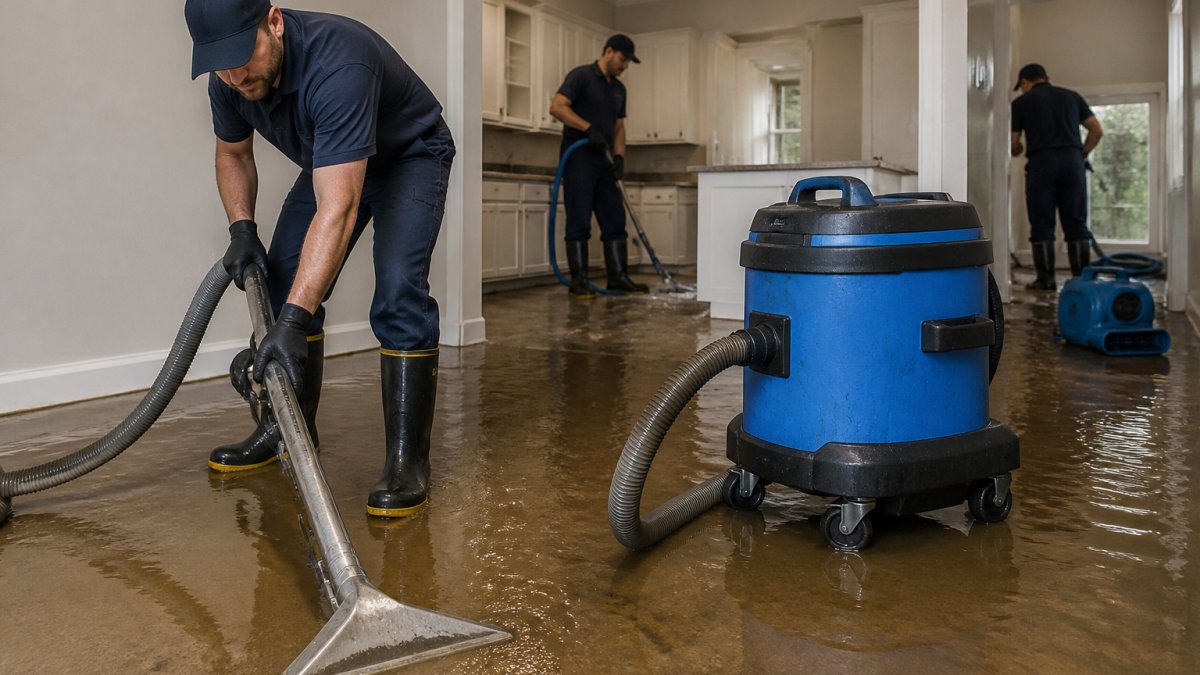
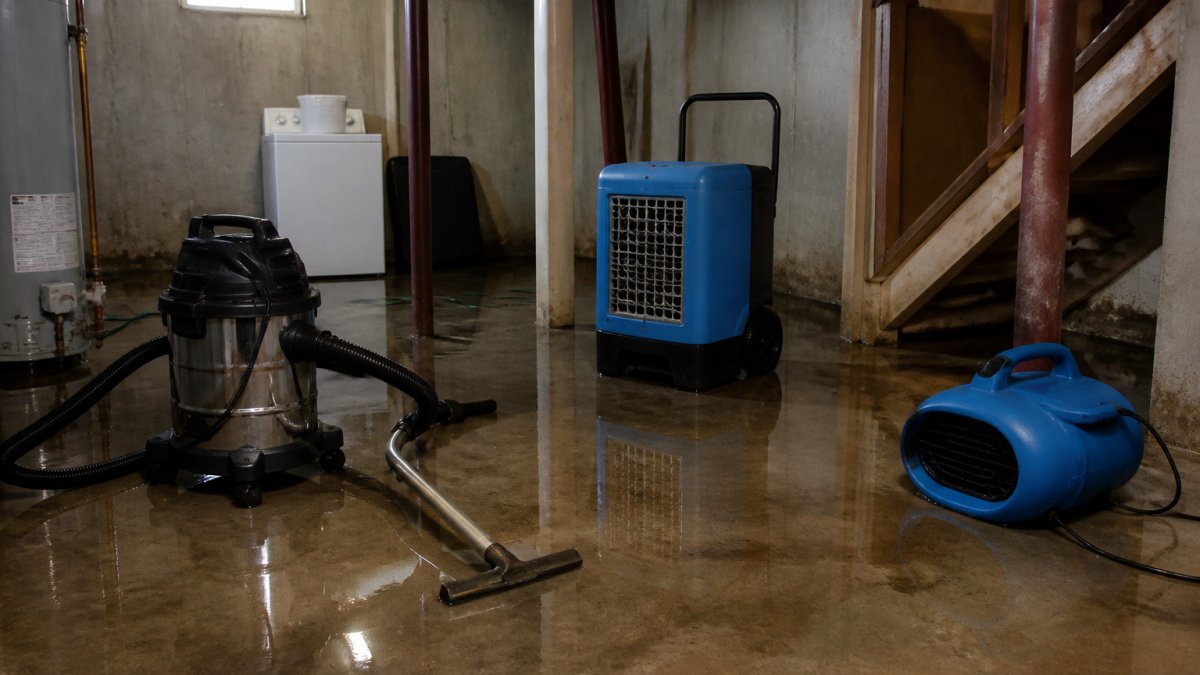
For small amounts, a wet/dry vacuum works. For significant flooding, use industrial-grade equipment:
- Submersible pumps move large volumes of water quickly
- Truck-mounted extractors pull water from carpet and flooring simultaneously
- Dehumidifiers begin removing moisture from the air while extraction happens
Start at the lowest point and work outward to prevent water flowing back into dried areas. Use equipment appropriate to each surface, carpet, hardwood, or concrete.
Step 2: Assess Floodwater Contamination and Flooring Damage
Before deciding what to dry and what to tear out, classify the water and inspect each flooring layer. The contamination category and material type together determine whether flooring can be dried in place or must be removed. Skipping this step is the most common reason a floor looks dry but fails weeks later.
Classify the water source first
The restoration industry groups water into three categories that drive every downstream decision:
- Category 1 (clean water): Broken supply lines, rainwater that has not touched a contaminated surface, or an overflowing sink. Low health risk. Often dryable in place if addressed within about 24-48 hours.
- Category 2 (gray water): Washing machine discharge, dishwasher overflow, toilet bowl water (without feces), or clean water that has sat long enough to grow microorganisms. Contains some contamination. Time-sensitive; becomes Category 3 if left more than roughly 48 hours.
- Category 3 (black water): Sewage backups, outdoor floodwater, river or storm surge intrusion, and any water that has contacted soil or waste. Assume it carries bacteria, viruses, and parasites. Porous materials that absorb it generally cannot be salvaged.
A practical rule: if you cannot confirm the source, treat it as Category 3 until proven otherwise.
Inspect each flooring layer
Work from the surface down. Each material has a different tolerance:
- Carpet and pad: The pad is almost always discarded after any Category 2 or 3 exposure. Carpet itself can sometimes be dried if it is Category 1 and caught within a day, but the pad underneath traps water and should be removed to expose the subfloor.
- Laminate: Laminate is a composite that swells and delaminates at the seams once water reaches the core. It rarely survives meaningful water exposure and is usually removed rather than dried.
- Sheet vinyl and tile: The surface may be salvageable, but water migrates through seams and grout lines into the adhesive and subfloor. The flooring often has to come up to dry what is beneath it.
Apply removal-versus-salvage criteria
Use these thresholds:
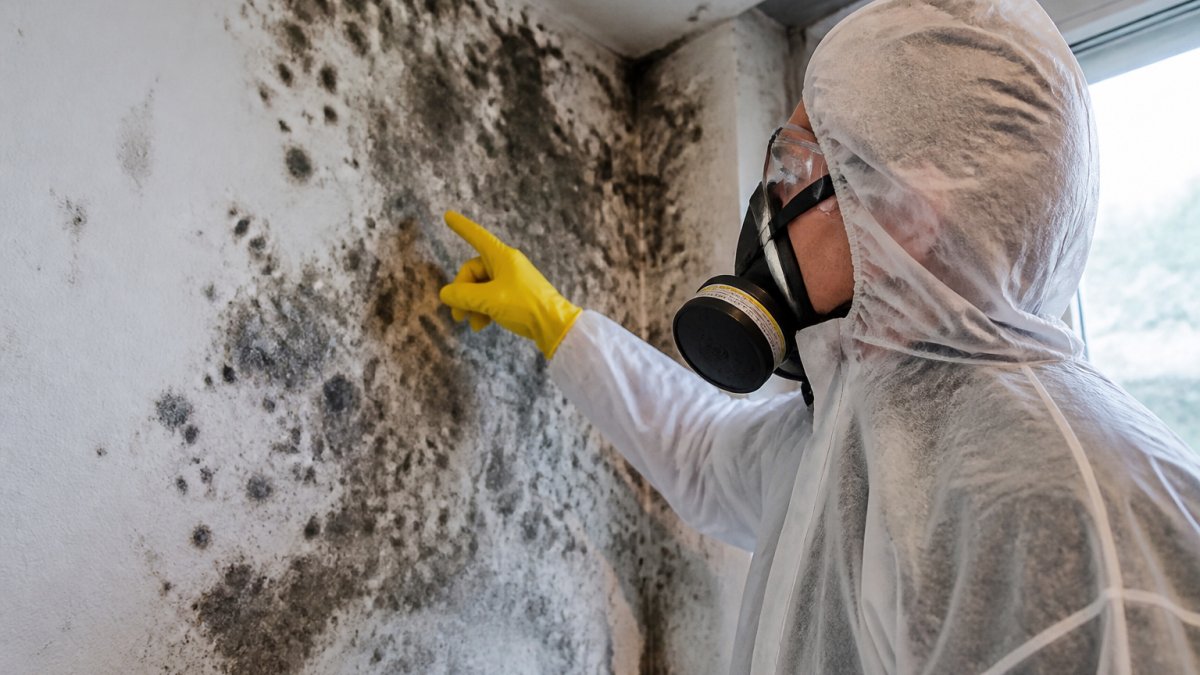
- Remove immediately: Any porous material exposed to Category 3 water; carpet pad in nearly all cases; laminate that has swelled; any material showing visible mold.
- Dry in place if caught early: Category 1 water on solid hardwood, tile, or concrete, addressed within about 24-48 hours with extraction, airflow, and dehumidification.
- Measure before deciding: For subfloors and any material you hope to save, take moisture readings and compare them to an unaffected area of the same material in the same room. A material is not dry just because it feels dry.
Set moisture targets
A moisture meter is the only reliable way to know when a material is dry. Because readings vary by material and meter, use comparison:
- Take a baseline reading from an unaffected section of the same material.
- Take readings from the wet area.
- The wet area is dry when its reading is within a few percentage points of the baseline.
As a reference, wood and wood-based subfloors are commonly considered dry enough for new flooring at roughly 12-17% moisture content, and concrete slabs are typically checked with a separate concrete moisture test before new floor covering goes down. Map several points across the room rather than relying on a single reading.
Once you've classified the water, identified wet layers, and set moisture targets, move on to airflow and mechanical drying.
Step 3: Improve Airflow and Ventilation for Drying
Moving air is essential for drying flooded floors, stagnant air traps moisture and breeds mold. Increasing airflow accelerates evaporation and prevents mildew.
Open windows and doors to create cross-ventilation. Position fans to push moist air outside:
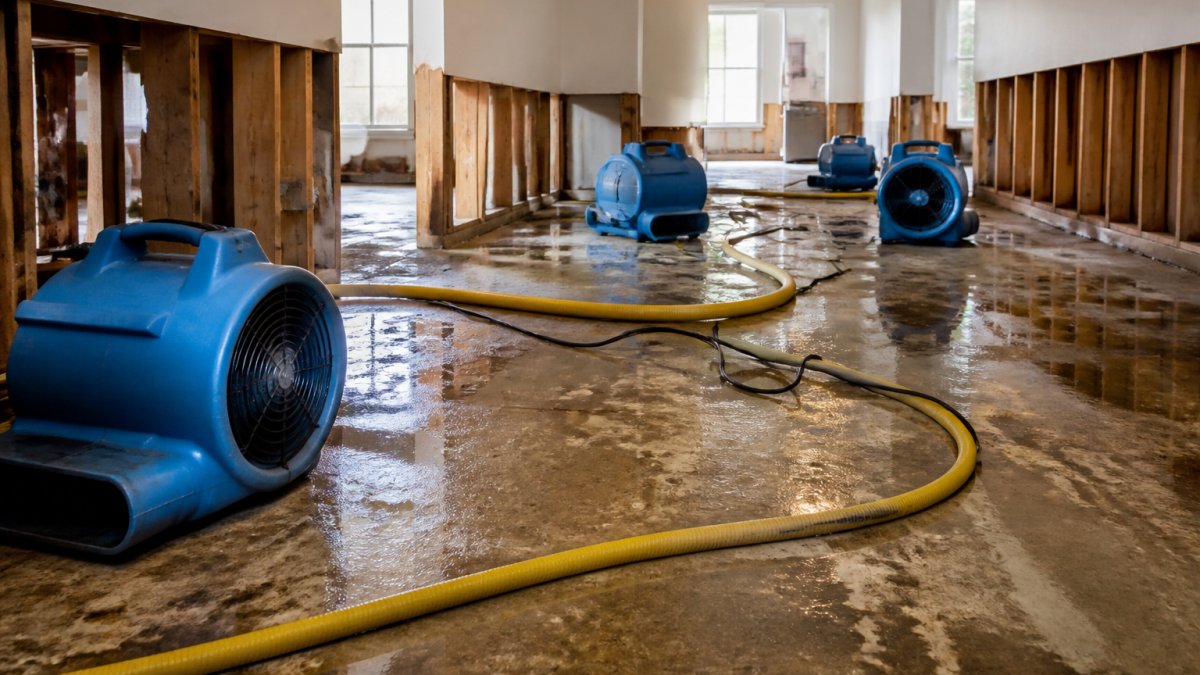
- Carpet fans (also called air movers) should point toward open windows or doors
- Box fans placed in windows push humid air out while pulling dry air in
- Pedestal fans circulate air within the room but don't remove moisture
Position fans strategically. Fans pointing at wet flooring push moisture into the air. Fans pointing toward open windows push that moist air outside.
Run fans continuously until flooring feels dry and humidity drops, typically 24-72 hours depending on temperature, humidity, and water volume.
Step 4: Deploy Wet Floor Drying Equipment
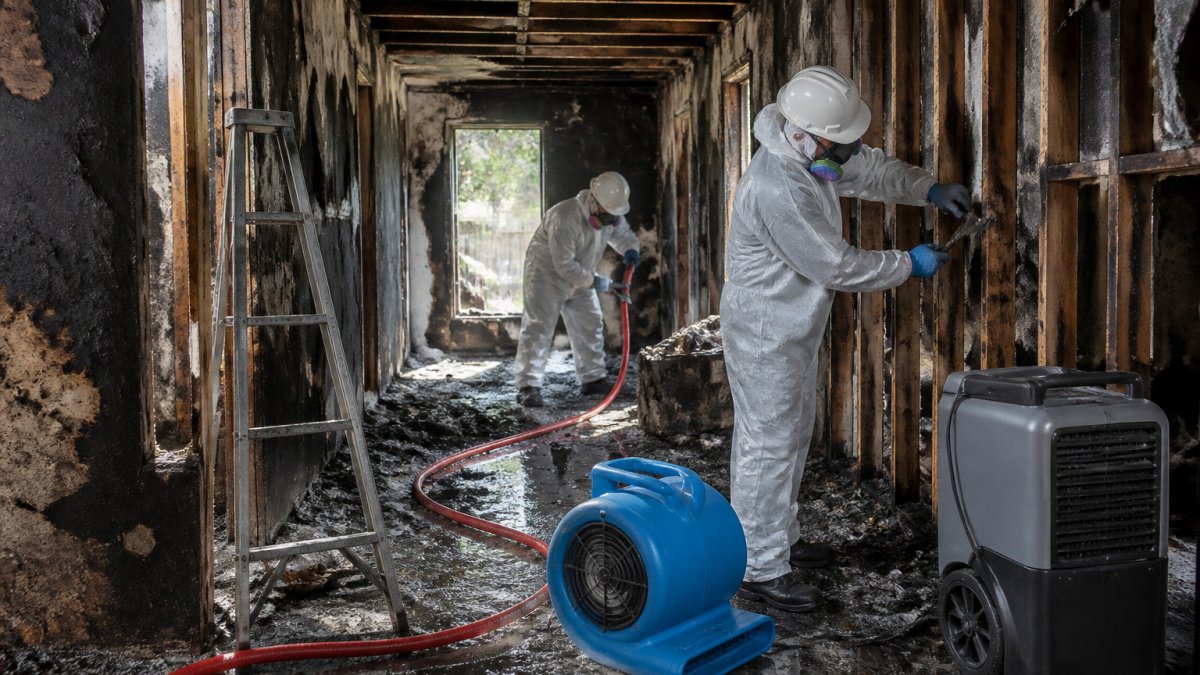
After extraction and ventilation, specialized equipment removes trapped moisture. Drying equipment works together to pull moisture from flooring, subfloors, and air.
A dehumidifier removes moisture from the air: as air passes through, water condenses and drains away.
Heat accelerates drying because warm air holds more moisture than cold air. Portable heaters or heated floors speed the process; keep temperatures between 70-85°F.
Monitor humidity with a moisture meter.
How to Dry Hardwood Floors After Water Damage
Hardwood flooring is vulnerable to water damage. Drying hardwood floors requires careful monitoring because wood swells, warps, and can split if dried too quickly.
If exposure was brief (under 24 hours) and the source clean, hardwood may survive.
Check the wood regularly. Slight swelling is normal; significant buckling, cupping, or gaps mean the wood cannot be saved and damaged sections must be replaced.
For extensive damage, professional drying is possible but expensive and slow.
How to Dry Water Trapped Under Flooring and Subfloors
Water under the flooring is the hardest moisture to remove and the most common cause of a failed repair. If the subfloor stays wet, any new flooring installed on top will fail, cup, or grow mold. Here is a sequenced protocol and the criteria for opening the floor versus drying from above.
Decide whether to remove the flooring
You cannot dry what you cannot reach. Use these criteria:
- Remove the flooring if: it is laminate, engineered wood, sheet vinyl over a wet subfloor, carpet with a soaked pad, or any material exposed to Category 2 or 3 water.
- Try drying in place if: it is solid hardwood, tile, or a finished concrete slab exposed to Category 1 water and caught within about 24-48 hours.
- When in doubt, remove a small section to inspect the subfloor directly. A 1-square-foot inspection hole tells you more than any surface reading.
Removing flooring is not a failure, it is often the fastest path to a dry subfloor and durable repair.
Dry the subfloor in sequence
Once exposed, dry the subfloor in this order:
- Extract any standing or pooled water with a wet/dry vacuum or submersible pump. Do not skip this, airflow alone will not remove standing water.
- Scrape or squeegee residual water toward your extraction point.
- Position air movers so they blow across the subfloor surface at a low angle, not straight down. The goal is a moving blanket of air across the wet surface.
- Run a dehumidifier in the same space to pull the moisture the air movers release. Without dehumidification, you are just circulating humid air.
- Add gentle heat if the space is cool. Warm air holds more moisture, but avoid high heat that can shock wood subfloors.
- Keep the space closed to outside humid air once mechanical drying is running. Unlike the initial ventilation phase, you now want to control the environment, not exchange it with outdoor air.
Dry wood versus concrete subfloors
The two behave very differently:
- Wood subfloor (plywood or OSB): Dries in roughly 3-7 days with proper airflow and dehumidification. Watch for delamination at the edges and any soft spots.
- Concrete slab: Porous and slow. Surface drying can happen in days, but moisture deep in the slab can take weeks to migrate out. If the slab is on grade or over a crawl space, ensure the space below is ventilated so vapor has somewhere to go.
Verify before you reinstall
Do not install new flooring based on how the subfloor looks or feels. Verify with measurements:
- Take moisture readings at multiple points across the subfloor.
- Compare each reading to an unaffected area of the same material.
- For wood subfloors, a common target is roughly 12-17% moisture content, and readings should be close to the baseline dry area.
Photograph your moisture readings with the meter visible in the frame. If you ever file an insurance claim or sell the home, dated readings are the proof that the subfloor was dry before the new floor went down.
When to call a professional
Call a water restoration professional if:
- The subfloor is concrete and readings have not dropped after several days of drying.
- You find soft spots, delamination, or a musty odor that persists after drying.
- The affected area is larger than your equipment can handle.
A professional crew uses industrial air movers, desiccant or refrigerant dehumidifiers, and moisture-mapping tools to dry subfloors faster and document results, which matters for your insurance claim and the new floor's long-term performance.
How Long Does It Take for Floors to Dry After a Flood
Drying time varies widely. Most flooded floors take 5-14 days to dry with proper equipment, but can take weeks without professional drying.
Factors affecting drying time:
- Water volume: Small spills dry in 24-48 hours. Significant flooding takes 7-14 days.
- Flooring type: Carpet dries faster than hardwood. Concrete takes longest.
- Subfloor material: Wood subfloors dry faster than concrete.
Monitor progress with a moisture meter: flooring materials should reach 12-17% moisture content and subfloors below 20%. Once targets are met, flooring is safe for new materials or refinishing.
Professional drying equipment accelerates the process significantly. Disaster Services uses industrial-grade extractors, dehumidifiers, and monitoring equipment to dry flooded floors efficiently, and can assess your property and provide a realistic timeline based on the damage.
Frequently Asked Questions
What is the best way to dry flooded floors?
The best way to dry flooded floors follows a clear sequence: first, remove all standing water using extraction equipment; second, assess the extent of damage and floodwater contamination; third, establish airflow with fans and open windows; fourth, deploy dehumidifiers to remove trapped moisture; and fifth, apply heat if safe to do so. The specific approach depends on your flooring type, water source, and extent of saturation. Professional water remediation teams use moisture meters to verify drying progress and determine if materials need removal or can dry in place.
How long does it take for floors to dry after a flood?
Drying time varies based on flooring type, water depth, humidity, and airflow. Carpet typically dries in 24-72 hours with proper equipment. Hardwood and laminate require 5-14 days or longer, depending on how deep water penetrated the subfloor and underlayment. Concrete floors may take 7-28 days. Trapped moisture under flooring extends drying time significantly. A moisture meter reading below 12-15% indicates the floor is safe for restoration. Professional drying equipment and continuous ventilation dramatically reduce drying time compared to passive air drying.
Can you dry hardwood floors after water damage?
Yes, hardwood floors can often be dried and saved if addressed quickly. The first 24-48 hours are critical. Remove standing water immediately, then establish airflow with fans and dehumidifiers. Hardwood may warp or swell if moisture isn't extracted rapidly. A moisture meter should show readings below 12% before the floor is considered dry. If water came from clean sources (burst pipe, rain) and drying begins within hours, hardwood has a strong chance of recovery. Contaminated floodwater or delayed response increases the likelihood that boards will need removal and replacement.
When should you call a water damage restoration professional?
Call a professional immediately if water damage affects more than a small area, if floodwater is contaminated (sewage, saltwater, chemical), if water has penetrated the subfloor or underlayment, if you cannot extract standing water within the first 24 hours, or if drying takes longer than expected and mold appears. Professional teams have industrial-grade extraction equipment, moisture meters, and drying protocols that prevent hidden moisture and mold growth. They also document damage for insurance claims and handle safe disposal of contaminated materials. For most significant flood events, professional response within the first few hours prevents exponentially higher restoration costs.
Water damage spreads quickly, and mold can begin growing within 24-48 hours. The best way to dry flooded floors depends on water volume, flooring type, and contamination level, but speed matters in every case. Disaster Services provides 24/7 emergency water extraction and structural drying to protect your home or business from further damage. Contact us today for a free visual inspection and custom drying plan tailored to your property.