 ultimate-guide
Structural Drying Process Explained Simply for Homeowners
Table of Contents
- What Structural Drying Is and Why It Matters After Water Damage
- The Three Stages of Structural Drying
- Structural Drying Equipment: What Each Tool Does
- A Step-by-Step Walkthrough of the Structural Drying Process
- How Long Does Structural Drying Take?
- Moisture Monitoring After Water Damage: How Pros Verify a Building Is Dry
- When Materials Can Be Dried in Place vs. Removed
- What Homeowners Should Do Before and During Professional Drying
- Frequently Asked Questions
Last Updated: October 18, 2026
What Structural Drying Is and Why It Matters After Water Damage
Structural drying is the controlled process of removing excess moisture from a building's materials, including walls, floors, framing, and subfloor, until they return to a normal moisture level.
Water moves. It wicks into drywall, creeps under flooring, and settles inside insulation where no towel will ever reach it. Left alone, that hidden moisture feeds mold growth and causes secondary damage that costs far more to fix than drying would have. The EPA guide to mold and moisture control is clear that moisture control is the foundation of any mold prevention strategy.
The Difference Between Drying a Surface and Drying a Structure
Wiping a wet surface dry is a cleaning task. Drying a structure is a physics problem. Air circulation pulls moisture off exposed surfaces, but the water inside framing and subfloor has to migrate outward first, then evaporate, then get removed from the air. Skip any of those steps and the material stays wet underneath a dry-looking face. A common mistake is declaring a room dry because the carpet feels fine. The moisture meter usually disagrees.
The Three Stages of Structural Drying
Every professional drying job moves through the same three stages: water extraction, evaporation, and dehumidification. Understanding the three stages of structural drying helps you follow what a crew is doing and why they keep equipment running overnight.
Stage 1: Extraction. Standing water and saturated materials hold far more water than air can carry away.
Stage 2: Evaporation. Once standing water is gone, the remaining moisture has to leave the material and enter the air. Air movers accelerate this by keeping a steady flow of drier air across wet surfaces.
Stage 3: Dehumidification. Evaporation puts water vapor into the air. If that vapor is not removed, relative humidity climbs, the air can no longer accept moisture from the materials, and the whole process stalls.
Run the stages out of order and you circulate humid air around a wet room, which accomplishes very little. Extraction before airflow, airflow before dehumidification, reversing them just moves moisture from one surface to another.
Structural Drying Equipment: What Each Tool Does
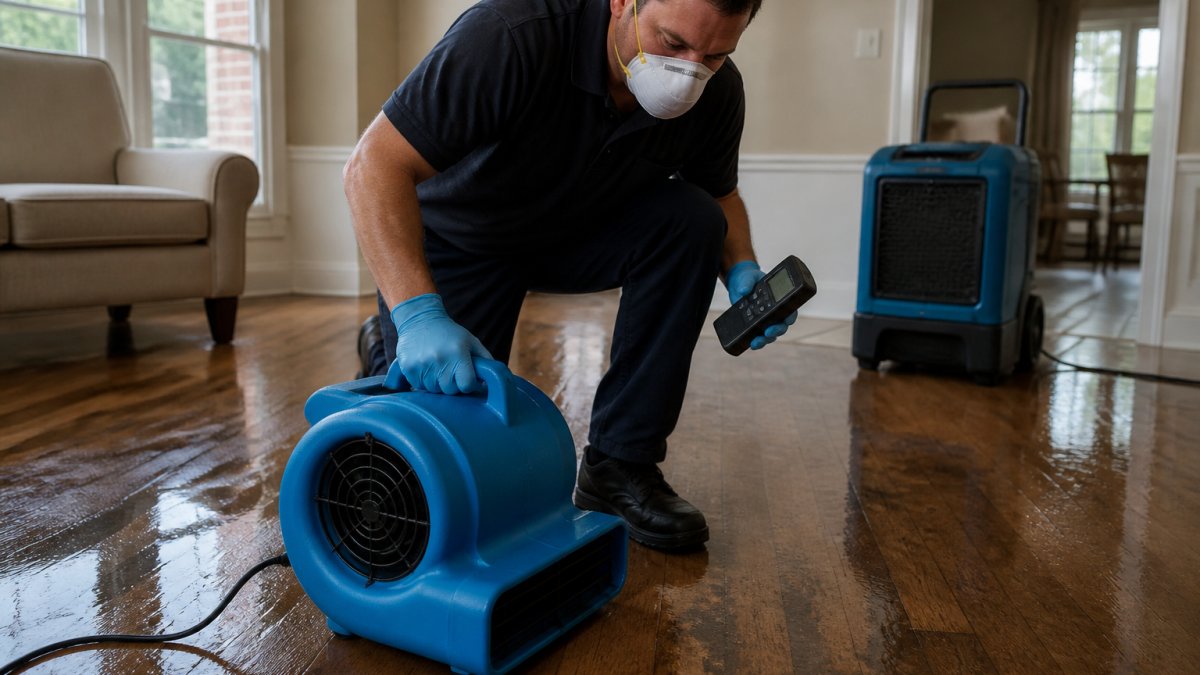
Structural drying equipment falls into two working groups: air movers that drive evaporation and dehumidifiers that remove the resulting moisture from the air. Both run together, monitored by moisture readings, until the building hits its drying goal. What separates a professional setup from a rented fan and dehumidifier is not the equipment list, it is how the equipment is sized, placed, and verified against a defined target.
Air Movers and Controlled Airflow
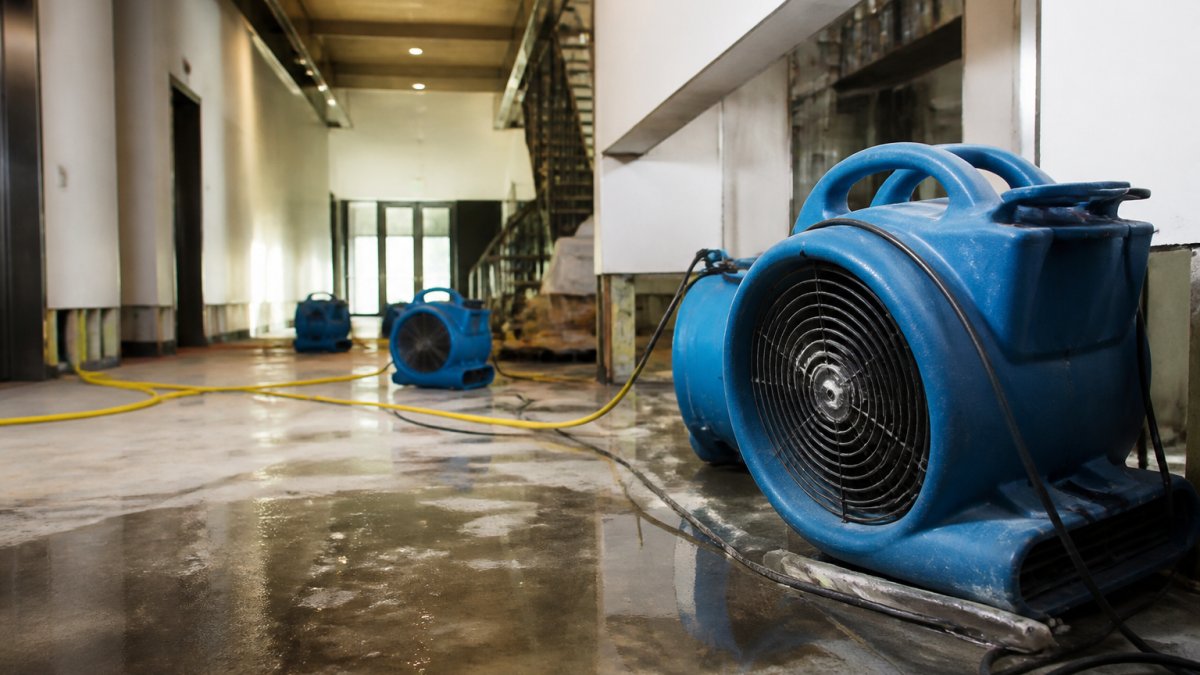
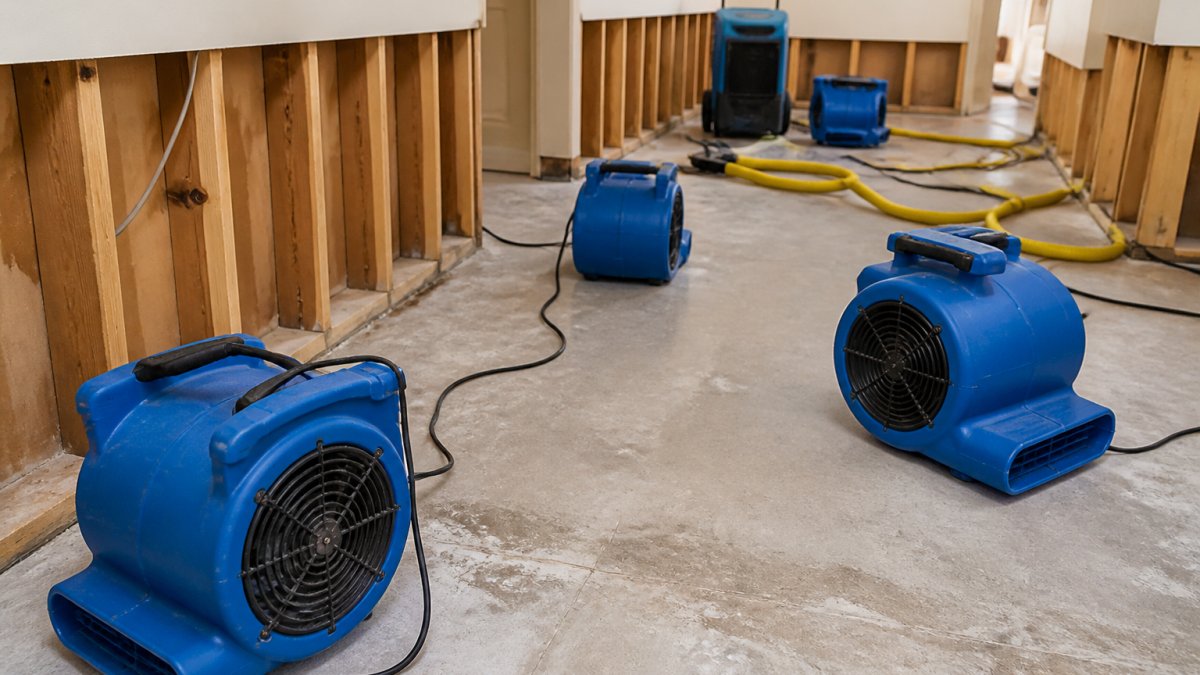
Air movers are high-velocity fans angled along walls and across floors to keep air moving over wet surfaces. The angle matters more than the fan count. Directed airflow accelerates evaporation at the surface, and air circulation in corners and behind furniture prevents stagnant pockets where moisture lingers. Poorly placed air movers just blow air around the room without touching the wet material. A common pattern is to place one air mover per wet wall section and angle it so the airflow skims the surface rather than blasting straight into it, the goal is a moving boundary layer of drier air, not a wind tunnel.
Dehumidifiers and Moisture Removal
Dehumidifiers remove water vapor from the air so evaporation can continue. Without dehumidification, relative humidity climbs, and wet materials stop releasing moisture because the surrounding air is already saturated. This is the stage homeowners underestimate most. The room feels dry, the fans are loud, and the dehumidifier seems optional. It isn't. Moisture removal from the air is what keeps the whole system moving forward. Refrigerant dehumidifiers work well in warm conditions; desiccant units are often used in cooler spaces where refrigerant coils lose efficiency. The right choice depends on the temperature and humidity of the space, not on which unit is available.
How Drying Goals Are Set and Verified
A drying goal is the moisture level a material needs to reach before equipment comes out. It is not one universal number. Technicians establish a baseline by taking moisture readings in unaffected materials of the same type, drywall in a hallway, framing in an adjacent wall, and use those readings as the comparison target for the wet areas.
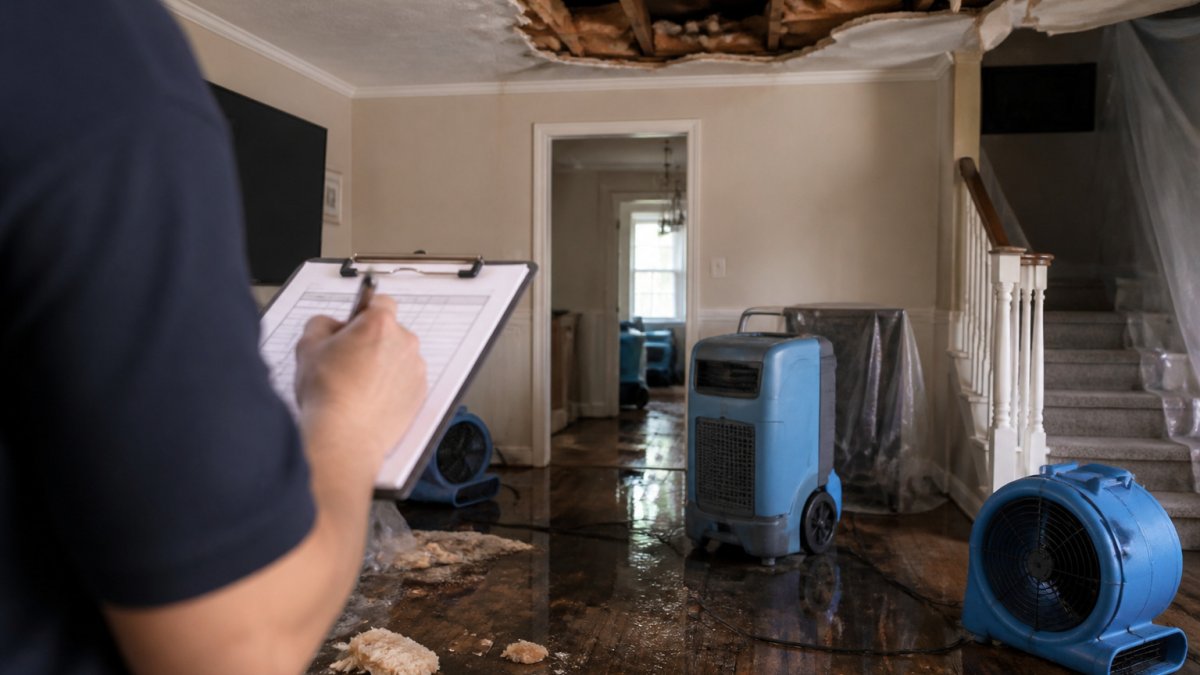
Verification happens with a moisture meter at marked locations, read daily and logged. The log shows moisture levels falling steadily toward the dry standard. If readings stall, that signals hidden moisture somewhere the equipment isn't reaching, and the crew needs to find it rather than declare victory. Final readings compared against the baseline are what prove the building actually dried, rather than just looking dry.
A Step-by-Step Walkthrough of the Structural Drying Process
Here is the sequence from the first call to the final sign-off, and it is the same order any competent crew should use.
- Inspection and baseline readings. Record moisture levels in every affected material before anything moves.
- Water extraction. Remove standing water and pump out saturated areas.
- Containment and safety check. Isolate the work area and confirm the space is safe to occupy.
- Equipment placement. Set air movers for controlled airflow and dehumidifiers for moisture removal.
- Daily moisture monitoring. Take readings at fixed points and log them.
- Adjustment. Reposition equipment as wet areas dry at different rates.
- Verification. Compare final readings to the dry standard and document the result.
The step most people skip is the first one. Baseline readings are what prove the building actually dried, rather than just looking dry.
How Long Does Structural Drying Take?
Most structural drying takes three to five days, though heavily saturated materials or extensive flooding can push it longer. How long structural drying takes depends on the materials involved, how much water entered, humidity and temperature during the job, and how quickly extraction started.
Drywall and insulation dry faster than subfloor and dense framing. Cool, humid weather slows evaporation. A building closed up with no air movement dries far more slowly than one with equipment running continuously. We tell homeowners to expect the equipment to stay in place for several days and to resist the urge to shut it off early. Turning off the dehumidifier on day two because the floor feels dry is one of the most common and expensive mistakes we see.
Moisture Monitoring After Water Damage: How Pros Verify a Building Is Dry
Moisture monitoring after water damage is how a crew proves the building is dry rather than guessing. Technicians use a moisture meter to take daily readings at marked locations, compare them against baseline readings, and check them against the drying goal for each material type.
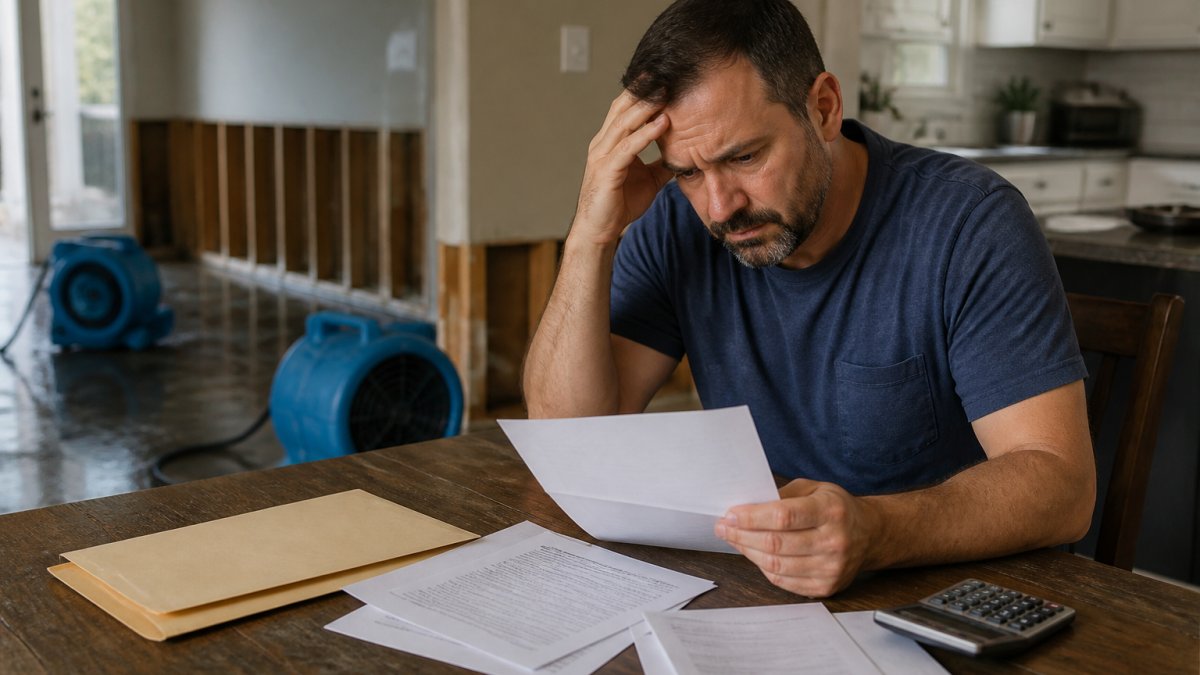
Verification is the part that separates a documented job from a hopeful one. Daily readings create a record showing moisture levels falling steadily, and that record matters for two reasons. It confirms the structure reached its drying standard before equipment comes out, and it supports the insurance documentation if questions come up later. If readings stall, that signals hidden moisture somewhere the equipment isn't reaching, and the crew needs to find it rather than declare victory.
When Materials Can Be Dried in Place vs. Removed
Some wet materials can be dried in place; others have to come out. Solid wood framing, subfloor, and often drywall can usually be dried in place if the water was clean and the damage was caught early. Materials that are saturated beyond recovery, contaminated by floodwater, or already showing mold growth typically get removed and replaced.
The decision comes down to three factors: how wet the material is, what kind of water caused the damage, and how long it has been wet. Clean water from a burst pipe is a different situation from flooding that carried contaminants. In practice, we remove insulation that has been soaked, because it loses its ability to dry and hold its shape. We keep framing whenever readings show it can reach the dry standard.
What Homeowners Should Do Before and During Professional Drying
Before a crew arrives, shut off the water source if you can safely reach it, and cut power to any affected rooms at the breaker. Move furniture and belongings off wet floors where possible, and take photos of everything before anything is moved. Those photos help with the insurance claim.
During the drying process, your job is mostly to stay out of the way and keep the conditions stable. Keep windows and doors closed so the equipment can control the indoor humidity.
Our technicians handle the drying, the monitoring, and the insurance documentation as one process, which means you are not coordinating between a drying crew and an adjuster on your own.
Frequently Asked Questions
What are the three stages of structural drying?
The three stages of structural drying are water extraction, evaporation, and dehumidification. First, standing water and water trapped in carpets and padding are removed with extractors. Second, air movers speed up evaporation from wet surfaces like drywall, framing, and subfloor. Third, dehumidifiers pull that evaporated moisture out of the air so it does not settle back into building materials. Skipping or rushing any stage slows the whole process and raises the risk of mold growth.
How long does structural drying take after a flood?
Most residential structural drying jobs take three to five days, though flooding that soaks into framing, insulation, or subfloor can run seven to ten days. Timelines depend on how much water entered, how long it sat, the materials affected, and indoor humidity and temperature. Technicians track daily moisture readings rather than guessing, and drying is finished only when readings match dry baseline standards for that material.
What equipment is used for structural drying?
Structural drying equipment typically includes truck-mounted or portable water extractors, air movers to create controlled airflow across wet surfaces, and dehumidifiers (refrigerant or desiccant) to remove moisture from the air. Technicians also use moisture meters and thermal imaging cameras to find hidden moisture, plus hygrometers to monitor relative humidity and temperature. In some cases, negative air machines and containment barriers keep dust and mold spores from spreading during the job.
How do professionals know when a building is dry?
Professionals confirm a building is dry by comparing daily moisture readings against dry baseline readings taken from unaffected materials of the same type. They measure moisture content in drywall, wood framing, and subfloor, and track relative humidity and temperature in the affected rooms. Drying goals are set at the start, and the job is complete when readings hold steady at target levels for consecutive days, not just when surfaces feel dry to the touch.
Can wet walls and floors be dried without removing them?
Often yes, if drying starts quickly. Drywall that is wet but not crumbling or sagging can sometimes be dried in place using air movers and dehumidifiers, especially when water came from a clean source. Materials usually need removal when they are saturated for too long, contaminated by floodwater, or already showing mold growth. A technician assesses each material with moisture readings before deciding to dry in place or cut it out.
When should I call a water damage restoration professional?
Call a professional when water has reached walls, flooring, or insulation, when the source was flooding or sewage, or when the affected area is larger than a small spill you can dry with towels and fans within a day. Hidden moisture behind baseboards and under floors is hard to detect without meters. Fast response matters because mold can begin growing on wet materials within 24 to 48 hours, so call as soon as you notice water intrusion.
Water damage gets more expensive with every hour it sits, and the difference between a dried structure and a mold problem often comes down to whether the process was run properly and verified with readings. If your home or business has taken on water, do not wait to see whether it dries on its own. Contact Disaster Services today for a free visual inspection, 24/7 emergency response, and a drying plan backed by daily moisture monitoring and full insurance claims assistance.