 how-to
Is Emergency Water Extraction Covered by Insurance?
Table of Contents
- What Emergency Water Extraction Covers (and What It Doesn't)
- The Homeowners Insurance Water Damage Claim Process, Step by Step
- How to Document Water Damage for Insurance Before the Crew Arrives
- Emergency Water Extraction Costs and How Insurers Pay
- Policy Exclusions Checklist: When Extraction Isn't Covered
- Water Categories and Why They Change Your Coverage
- Frequently Asked Questions
Last Updated: September 25, 2026
What Emergency Water Extraction Covers (and What It Doesn't)
Most homeowners are relieved to learn that emergency water extraction is covered by homeowners insurance when damage is sudden and accidental. A burst pipe flooding your kitchen at 2 a.m. is the classic covered event; water seeping in slowly over months is not.
Coverage rarely turns on the water itself, it turns on how the water got there and how fast you responded.
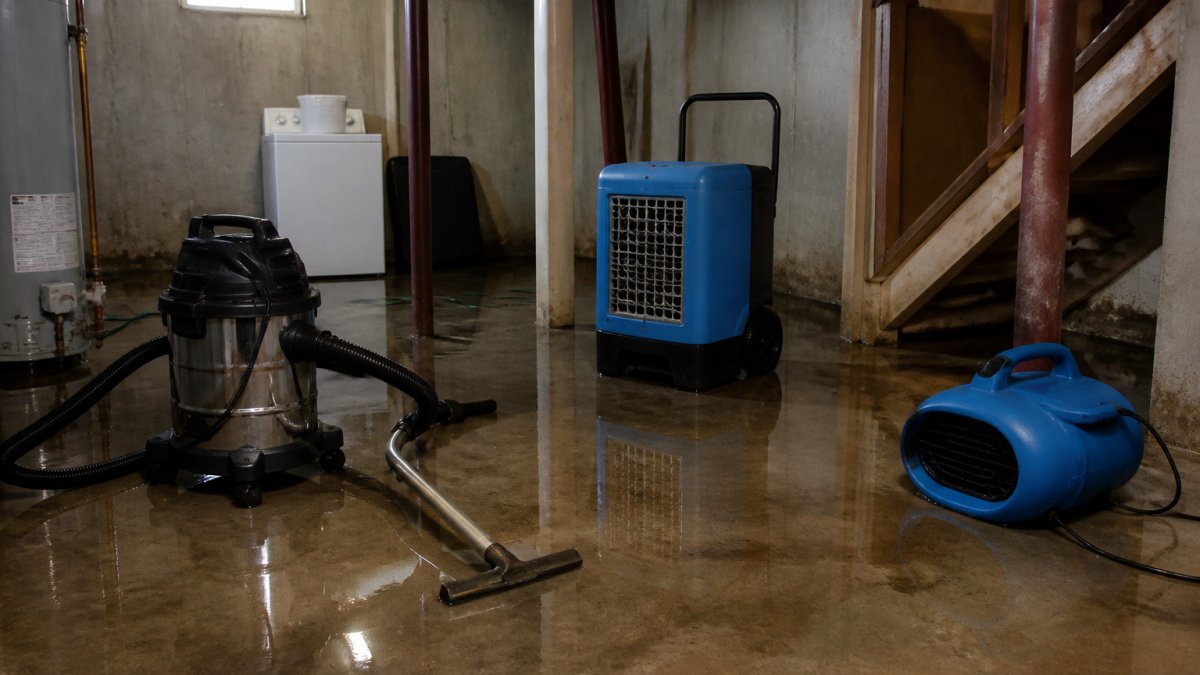
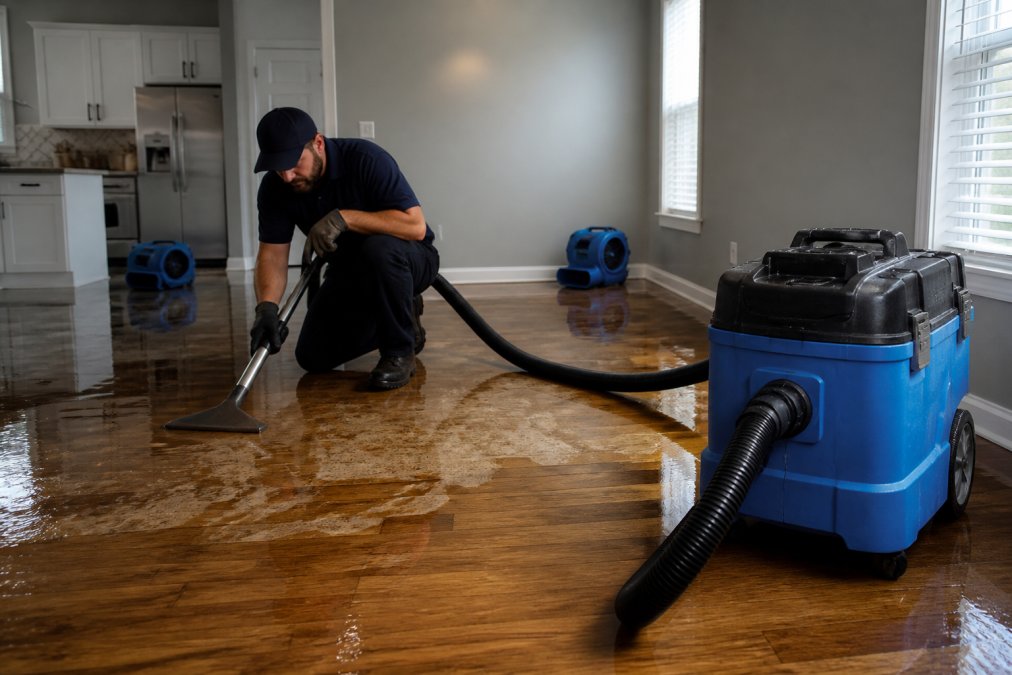
Emergency water extraction removes standing water using pumps and vacuums, usually within hours of a flood or leak. Most policies treat it as part of a larger covered loss, not a separate service.
Here's the part that trips people up: your policy covers the result of a sudden event, not the event itself.
Sudden vs. Gradual Damage: The Line That Decides Your Claim
Sudden and accidental damage comes from a single, unexpected event. Gradual damage builds over time through neglect or slow deterioration. Insurers draw the line because one is insurable and one is preventable.
Covered events typically include:
- Burst pipes and failed supply lines
- Appliance malfunctions like a washing machine hose
- Accidental overflow from tubs or sinks
- Storm-driven water entering through a damaged roof
Not covered:
- Long-term leaks you should have noticed
- Flooding from rising water (needs separate flood insurance)
- Sewage backup (usually an add-on)
- Poor maintenance or neglect
The Homeowners Insurance Water Damage Claim Process, Step by Step
The homeowners insurance water damage claim process follows a predictable path, but the deadlines and paperwork inside each step are where claims succeed or fail.
- Stop the water and call a restoration crew. Mitigation comes first, paperwork second. Your duty to mitigate obligates you to prevent further damage, waiting for the adjuster is not an excuse.
- Report the loss to your insurer. Most carriers run 24/7 claims lines. Nearly every policy contains a prompt-notice clause, and delays give the carrier grounds to reduce or deny.
- Document everything before cleanup. Photos, video, and a written inventory. Once damaged items are in the dumpster, they're hard to prove existed.
- Meet the adjuster on site. Walk through the damage together. You are entitled to a copy of the adjuster's report.
- Get a written scope of work. This lists what will be repaired or replaced, line by line. Compare it against your contractor's estimate before signing.
- Review the settlement offer. If it is short, supplement the claim with additional documentation or invoke the appraisal clause.
- Approve repairs and keep every receipt. Reimbursement depends on documentation, and the carrier may audit.
The Proof of Loss: The Document That Actually Triggers Payment
Most policies require a signed proof of loss, a sworn statement listing the date, cause, and amount of the loss, within a set window after the carrier requests it (commonly 60 days; check your policy). Missing the deadline is one of the most common reasons a legitimate claim gets denied.
What the proof of loss typically includes:
- Date and time the loss occurred
- Cause of the loss (burst pipe, appliance failure, etc.)
- Itemized list of damaged property with values
- Receipts, photos, and contractor estimates as attachments
- Your signature, which carries legal weight
Your Duty to Mitigate: What the Policy Requires You to Do
Your policy requires reasonable steps to prevent further damage after a loss. This is the duty to mitigate, and it is the single biggest reason emergency water extraction is covered at all, the carrier would rather pay for a few hours of pumping than replace a floor, subfloor, and joists. Ignoring it can reduce or void your payout.
What counts as reasonable:
- Extracting standing water within hours
- Setting up fans or calling a drying service
- Moving furniture and valuables off wet floors
- Tarping a damaged roof to stop more water
- Shutting off the water supply at the main valve
What does not:
- Waiting days for the adjuster before doing anything
- Leaving wet carpet in place "to show the damage"
- Ignoring a small leak because the claim seems too minor
When the Offer Is Too Low: Appraisal and Bad-Faith Remedies
If you and the carrier disagree on the amount of the loss (not whether it's covered), most policies include an appraisal clause. Each side hires an independent appraiser, and if they disagree, an umpire decides. Appraisal is usually faster and cheaper than litigation.
How to Document Water Damage for Insurance Before the Crew Arrives
Document water damage for insurance by photographing everything before cleanup begins. Your phone is your best tool in the first hour.
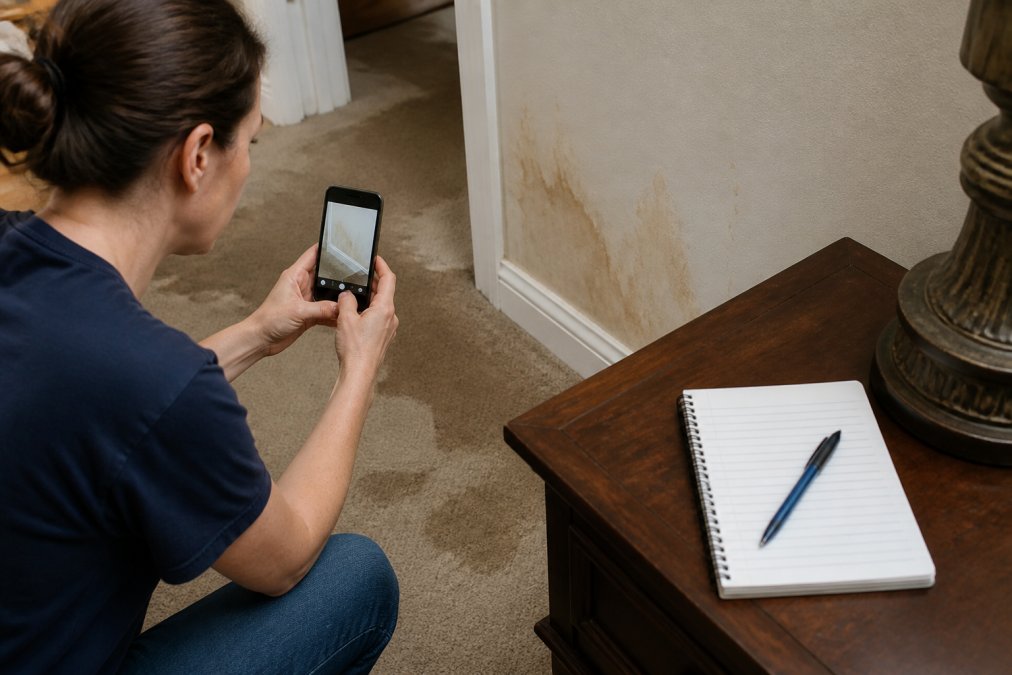
Your documentation should cover:
- Wide shots of each affected room
- Close-ups of water lines, stains, and warped materials
- Photos of damaged furniture, electronics, and personal items
- A short video walking through the space and narrating what you see
- Receipts for anything you buy to stop the damage
Emergency Water Extraction Costs and How Insurers Pay
The cost of emergency water extraction depends on how much water is involved, what materials are affected, and how fast the crew can reach you. Most homeowners pay their deductible and the insurer covers the rest, up to policy limits.
Typical cost drivers, in order of impact:
- Square footage of affected area.
- Water category. Category 1 (clean) is cheapest. Category 3 (black water) requires disposal of porous materials and disinfection, which can multiply the bill.
- Materials affected. Carpet and pad are cheap to replace. Hardwood, subfloor, and cabinetry are not.
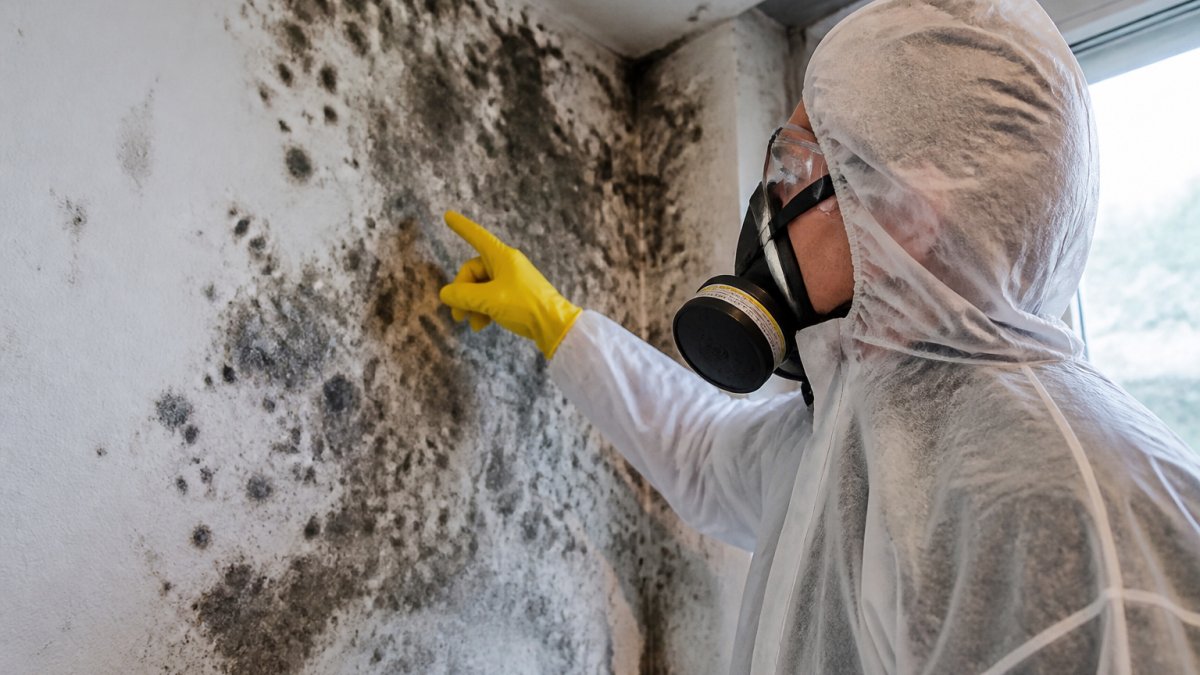
- Mold treatment. If drying is delayed past 24-48 hours, antimicrobial and possibly remediation work gets added.
- After-hours or emergency response. Nights, weekends, and holidays often carry a premium.
- Access and equipment. A crawlspace or a multi-story home requires more labor and more drying equipment.
Direct Billing vs. Reimbursement: Two Paths to Getting Paid
This is the decision most homeowners get wrong: two ways to pay for restoration, with very different cash-flow implications.
What Your Policy Limit Actually Caps
Your dwelling coverage limit (Coverage A) caps what the carrier pays to repair the structure; your personal property limit (Coverage C) caps contents. Extraction and drying usually fall under Coverage A as part of the covered loss, but a large loss can hit the limit before work is done, and the overage is yours.
Policy Exclusions Checklist: When Extraction Isn't Covered
Extraction isn't covered when the water damage falls under a policy exclusion. Run this checklist before assuming your claim will be paid.
- Was the damage caused by flooding from outside? (Needs flood insurance)
- Did water back up from a sewer or drain? (Needs backup coverage)
- Was the leak slow and ongoing? (Gradual damage exclusion)
- Did neglect or poor maintenance cause the problem?
- Is the property vacant or unoccupied beyond policy limits?
- Was the damage from a sump pump failure without a rider?
- Did you fail to mitigate after discovering the loss?
Water Categories and Why They Change Your Coverage
Water categories determine how much of your home can be saved and how the claim is handled. Category 1 is clean water from a safe source. Category 2 is gray water with some contamination. Category 3 is black water, heavily contaminated and dangerous.
Category 1 sources:
- Broken supply lines
- Rainwater from a damaged roof
- Overflow from a clean sink or tub
Category 2 sources:
- Washing machine discharge
- Toilet overflow with urine only
- Water sitting long enough to grow bacteria
Category 3 sources:
- Sewage backup
- Ground surface water
- Any water with visible contamination
Frequently Asked Questions
What type of water damage is not covered by homeowners insurance?
Standard homeowners policies exclude gradual damage, such as slow leaks behind walls or under sinks that developed over weeks or months. Flood damage from rising water is also excluded and requires a separate flood insurance policy. Other common exclusions include neglect, intentional damage, and earth movement. If your damage resulted from a sudden event like a burst pipe, it is more likely to be covered. Review your policy's exclusions section carefully.
How much does emergency water extraction cost?
The average cost of emergency water extraction depends on the size of the affected area, the water category, and how long the water has been sitting. Most homeowners insurance policies cover extraction when the damage is sudden and accidental. Request a written estimate before work begins.
What steps should I take to document water damage for an insurance claim?
Start by photographing and videoing all affected areas before any cleanup begins. Capture wide shots of each room and close-ups of damaged belongings, water lines, and structural harm. Keep a written inventory of damaged items with approximate values. Save receipts for emergency repairs, hotel stays, and any extraction services. Do not throw away damaged items until your adjuster has inspected them. This documentation strengthens your claim and speeds up reimbursement.
Does homeowners insurance cover the cost of emergency water mitigation?
Most homeowners insurance policies cover emergency water mitigation, including extraction and drying, when the damage is sudden and accidental. Covered events typically include burst pipes, appliance failures, and storm-driven rain entering through a damaged roof. However, flood damage and gradual leaks are usually excluded. Your policy limits and deductible will affect how much you receive. Contact your insurer immediately after discovering the damage to start the claim process.